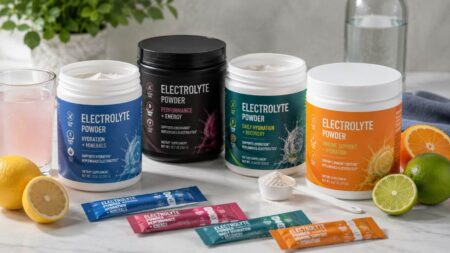
The best electrolyte powder supplements of 2026 replace 3 core minerals: sodium, potassium, and magnesium. You lose these minerals through sweat during exercise, hot weather, and illness. Brands like LMNT, Liquid I.V., and Transparent Labs Hydrate rank among the top formulas for 2026. Each brand matches its electrolyte doses to a specific activity level. This guide walks you through 7 top picks, dosing rules, and mixing steps. You can use it to choose the right formula for your body and climate.
What Do Electrolyte Powders Actually Contain?
Electrolyte powders contain minerals that carry an electrical charge through your body’s fluids. Sodium, potassium, magnesium, calcium, chloride, and phosphate make up the 6 electrolytes your body relies on every day. Each mineral serves a distinct function. Losing too much of any single mineral through sweat can trigger cramps, fatigue, or headaches. Food alone covers most of your mineral needs on a normal day. Heat, illness, and long workouts change that equation fast.
Sodium and Potassium: The 2 Core Minerals
Sodium controls fluid balance, muscle contraction, and nerve signaling in your body. You lose sodium at a higher rate than any other mineral while sweating. Potassium ranks second in sweat loss and supports steady heart rhythm and nerve function. Most electrolyte powders pair sodium and potassium in a 2:1 ratio, such as 500 mg sodium to 250 mg potassium. If your daily diet already runs low in potassium, review this best potassium supplements guide to close the gap between meals and workouts.
Magnesium, Calcium, and Chloride: The Supporting 3
Magnesium powers over 300 reactions in your body, including energy production and muscle relaxation. Calcium supports bone strength, blood clotting, and muscle contraction alongside sodium and potassium. Chloride works with sodium to maintain fluid balance and stable blood pressure. These 3 minerals matter less during workouts under 1 hour (60 minutes). Daily food sources often cover your needs during shorter sessions. Athletes who train through long, hot sessions can pair their electrolyte mix with these magnesium glycinate supplements. Doing so adds extra muscle and nerve support between training blocks.
What Causes Electrolyte Loss Through Sweat?
Sweat glands pull sodium, potassium, chloride, and small amounts of magnesium and calcium from your bloodstream. Heat, humidity, and exercise intensity determine how much sodium your sweat glands release per hour. Heavy sweaters can lose 2 to 3 times more sodium per liter of sweat than light sweaters. Genetics, fitness level, and heat acclimation all shape your personal sweat rate. Runners, cyclists, and construction workers in hot climates lose the most minerals across a typical day. A simple sweat test involves weighing yourself before and after 1 hour of exercise. Convert the weight loss to fluid ounces or milliliters to estimate fluid loss.
What Are the Best Electrolyte Powder Supplements for Everyday Hydration?
The best electrolyte powder supplements for everyday hydration contain 200 mg to 300 mg of sodium and skip added sugar. You need a lower mineral dose for daily sipping than for intense training. Everyday formulas suit 3 groups of people. Office workers who sit in air-conditioned rooms make up 1 group. Parents who chase toddlers around the house make up a second group. Travelers who cross time zones and climates make up a third group. Bangladesh’s hot, humid climate raises daily sweat loss even without exercise. A light electrolyte mix supports steady hydration through a normal workday. Look for a formula with 5 or fewer ingredients and no artificial dyes. Daily formulas also work well mixed into 500 ml (17 fluid ounces) bottles. Refill and sip your bottle throughout the day for steady hydration.
How to Choose the Best Electrolyte Powder Supplements for Your Needs
Match your sodium dose to your activity level, sweat rate, and health history before you buy an electrolyte powder. Electrolyte powders range from 100 mg to over 1,000 mg of sodium per serving. Your ideal formula depends on how hard and how long you train. Your climate, clothing, and body size also change how much you sweat.
Match Sodium Dose to Activity Level
To match sodium dose to activity level, start with your workout duration and intensity. Choose 200 mg to 300 mg of sodium for daily hydration or activity under 1 hour. Select 500 mg to 700 mg of sodium for moderate to intense exercise lasting over 1 hour. Reserve formulas above 1,000 mg of sodium for endurance events like marathons (26.2 miles or 42 km). Long-distance cycling routes also call for these higher-sodium formulas.
Check for Third-Party Certification
To check for third-party certification, look for seals from NSF International or Informed Sport on the label. The Food and Drug Administration (FDA) does not test dietary supplements before they reach store shelves. Third-party testing confirms a product contains the ingredients listed at the stated doses. Competitive athletes should choose NSF Certified for Sport formulas to avoid banned substances. Recreational users benefit from third-party testing too. Testing verifies label accuracy and screens for heavy metal contamination.
Read the Ingredient List for Hidden Additives
To read the ingredient list for hidden additives, scan for artificial dyes, added caffeine, and unnecessary fillers. Registered dietitians confirm caffeine acts as a diuretic. Caffeine works against your hydration goal even in small doses. Artificial sweeteners like sucralose can trigger stomach discomfort in sensitive users. Choose stevia leaf extract, monk fruit extract, or allulose for a cleaner sweetener profile.
Top 7 Electrolyte Powder Supplements to Try in 2026
These 7 electrolyte powders cover every use case, from marathon training to everyday hydration in hot, humid climates.
- LMNT Electrolyte Drink Mix delivers 1,000 mg of sodium per serving for high-sweat, high-intensity training days. Its zero-sugar formula suits keto, low-carb, and paleo diets, and it costs about $1.67 per serving.
- Liquid I.V. Hydration Multiplier uses Cellular Transport Technology (CTT) to speed water absorption into your cells. Each packet supplies 500 mg of sodium alongside vitamin C and several B vitamins.
- Transparent Labs Hydrate provides a balanced 2:1 sodium-to-potassium ratio with zero added sugar per serving. The formula also adds taurine to support endurance and recovery after exercise.
- Nuun Sport Electrolyte Tablets dissolve into a fizzy drink and suit travel bags and daily carry. Each tablet supplies 300 mg of sodium and mixes in under 5 minutes.
- Pedialyte Electrolyte Powder targets rehydration after vomiting, diarrhea, or illness for both children and adults. The formula matches the sodium and potassium ratios used in hospital rehydration solutions.
- Gatorlyte Rapid Rehydration Powder matches the sodium profile of Gatorade’s ready-to-drink sports line. Each serving supplies 490 mg of sodium and 350 mg of potassium for fast recovery.
- Key Nutrients Electrolyte Recovery Plus suits keto and low-carb diets with 0 grams of sugar per serving. The formula adds 13 vitamins alongside 6 core electrolytes for daily wellness support.
Each product suits a different goal, so match the formula to your training schedule, sugar tolerance, and local climate. Flavor availability also varies by brand. Check that your preferred taste ships to your region before you commit to a large tub.
How Were These 7 Electrolyte Powder Supplements Selected?
This list draws on ingredient labels, third-party certification records, and published sodium and potassium doses from each brand. Each product on this list discloses its full electrolyte profile on the Supplement Facts panel. Formulas without a Supplement Facts label follow Nutrition Facts rules instead. Those rules apply to food and beverage products rather than supplements. Registered dietitians and sports medicine physicians commonly recommend the brands featured here. Price, flavor variety, and dietary compatibility also shaped the final selection.
How Much Electrolyte Powder Should You Drink Each Day?
Most healthy adults need 2,300 mg of sodium and 4,700 mg of potassium daily. The Dietary Reference Intakes (DRI) also set magnesium at 310 mg to 420 mg per day. Your exact need depends on your body weight, climate, and sweat rate. Athletes who train daily in heat above 86°F (30°C) often fall short of these targets through food alone. This magnesium complex supplements guide breaks down dosing further for anyone who wants a dedicated mineral boost. Track your intake for 1 week to see whether your current routine meets your daily targets.
Quick-Reference: Electrolyte Hydration Tasks
| Task | Timing | Method | Difficulty |
| Preload electrolytes | 2 hours before exercise | Mix 1 packet in 8-12 oz (240-355 ml) water | Easy |
| Sip during exercise | Every 20-30 minutes | Drink 4-6 oz (120-180 ml) per interval | Easy |
| Rehydrate after exercise | Within 30 minutes post-workout | Mix 1 packet in 16 oz (475 ml) water | Easy |
| Manage illness fluid loss | As directed by a doctor | Follow package dosing for age and weight | Moderate |
| Track daily sodium intake | Ongoing, daily | Log servings against the 2,300 mg DRI target | Moderate |
How to Mix Electrolyte Powder for Maximum Absorption
To mix electrolyte powder for maximum absorption, stir 1 packet into cold water. Use 8 to 16 fluid ounces (240 to 475 ml) per packet. Stir for 20 to 30 seconds until the powder fully dissolves into the liquid. Undissolved powder settles at the bottom of your bottle as salty clumps. Shake the mixture inside a sealed bottle if you lack a spoon nearby. Cold water dissolves most formulas faster than room-temperature water. Cold water also tastes more refreshing after a workout. Store any leftover mixed liquid in a refrigerator and finish it within 24 hours.
What Are the Warning Signs of an Electrolyte Imbalance?
Muscle cramps, headaches, fatigue, and dizziness signal an early electrolyte imbalance in most people. Low sodium, known as hyponatremia, can cause confusion, nausea, and an unsteady gait in severe cases. Low potassium often shows up as muscle weakness or an irregular heartbeat. Marathon runners who drink only plain water during a race face a higher risk of hyponatremia. Contact a doctor immediately if you experience confusion, seizures, or severe muscle weakness. Mild symptoms usually improve within 1 to 2 hours after you rehydrate and rest in a cool space.
When Should You Avoid Electrolyte Powder Supplements?
You should avoid high-sodium electrolyte powders if you manage a cardiovascular condition, kidney disease, or high blood pressure. People who take diuretics or blood pressure medication face a higher risk of electrolyte imbalance. Children under 12 years old should not use adult electrolyte formulas without a doctor’s approval. Pregnant women, people managing diabetes, and anyone with a history of kidney stones need extra caution. Consult a physician before adding a new electrolyte routine in any of these cases. Ask your doctor about your specific sodium, potassium, and magnesium targets.
Electrolyte Powder Supplements for Keto, Vegan, and Sensitive Stomachs
Keto dieters, vegans, and people with sensitive stomachs each need a slightly different electrolyte powder formula. Keto dieters benefit most from zero-sugar, zero-carb formulas like LMNT and Key Nutrients Electrolyte Recovery Plus. These formulas replace sodium lost during the early keto flu phase. They do this without breaking a low-carb diet. Vegans should choose plant-based formulas like Vega Sport Hydrator, which skips animal-derived ingredients entirely. People with sensitive stomachs should avoid sugar alcohols and high doses of vitamin C. Both ingredients can trigger bloating or diarrhea in sensitive users. Stick to formulas sweetened with monk fruit extract if stevia upsets your stomach.
How Much Does an Electrolyte Powder Supplement Cost?
Electrolyte powder supplements cost between $0.35 and $2.00 per serving, depending on the brand and ingredient quality. Budget options like Propel and Gatorlyte sit at the low end of this range. Premium formulas add extras like taurine, branched-chain amino acids (BCAAs), or organic sourcing. Transparent Labs and Kaged fall into this premium category and cost more per serving. Buying a 30-serving or 60-serving tub instead of single packets usually lowers your cost. This bulk approach can save you 20% to 40% per serving. Compare the price per serving, not the sticker price on the box.
Electrolyte Powder vs Other Hydration Products: 3 Key Differences
Electrolyte powder, chews, and drops all replace lost minerals, but each product delivers a different concentration. Powder delivers the highest mineral concentration per serving compared to chews, drops, or tablets.
- Concentration: Powder packs more sodium and potassium into 1 serving than chews or liquid drops.
- Convenience: Chews and gels fit into running belts and race-day pockets more easily than powder packets.
- Speed: Tablets take longer to dissolve fully, while powder mixes within 30 seconds in cold water.
Conclusion
Choosing among the best electrolyte powder supplements comes down to your sodium needs, sugar tolerance, and training schedule. Match your formula to your activity level and check for third-party certification. Stir each packet into cold water for full absorption every time. Pair your daily hydration routine with these magnesium malate supplements to support muscle recovery after your hardest training days.