The best green tea extract supplements for metabolism in 2026 combine standardized EGCG (epigallocatechin gallate), verified third-party testing, and a caffeine level that matches your tolerance. You get the strongest metabolic support from formulas with 300 mg to 500 mg of EGCG per serving. This guide compares 8 supplement formats, breaks down safe dosing, and shows you how to pick a product that fits your body and your budget.
Green tea extract supplements deliver a concentrated dose of catechins from Camellia sinensis leaves. One capsule can match the EGCG content of 3 to 6 cups of brewed tea. You avoid bitterness and excess liquid volume while still getting the metabolic boost that green tea extract supplements are known for.
How Does Green Tea Extract Boost Your Metabolism?
Green tea extract raises your metabolic rate by activating AMPK (adenosine monophosphate-activated protein kinase) and by inhibiting an enzyme called COMT. This combination increases fat oxidation by 10%-17% during moderate exercise, according to a 2009 meta-analysis by Hursel and colleagues. Your body burns stored fat more efficiently when EGCG blocks the breakdown of norepinephrine, a hormone that triggers thermogenesis.
What Is EGCG and Why Does It Matter?
EGCG stands for epigallocatechin gallate, the most active catechin in green tea leaves. EGCG makes up 50% to 80% of the total catechin content in a typical extract. You need a higher dose than brewed tea provides because EGCG reaches only 1% to 5% oral bioavailability. Manufacturers compensate for this low absorption by concentrating the extract into standardized capsules, powders, and liquid drops.
How Caffeine and EGCG Work Together
Caffeine and EGCG amplify each other’s fat-burning effect through the same COMT pathway. Caffeinated green tea extract produces stronger thermogenic effects than decaf versions in clinical trials. Choose a decaf formula if you already consume coffee, energy drinks, or pre-workout products with caffeine. Combining multiple caffeine sources raises your risk of jitters, an elevated heart rate, and poor sleep.
Does Green Tea Extract Suppress Your Appetite Too?
Green tea extract offers a mild appetite-suppressing effect in addition to its thermogenic action. Catechins slow gastric emptying slightly, which helps you feel fuller after a standard meal. You should not rely on this effect alone, since the change in appetite is modest compared with structured calorie tracking or a high-protein diet.
Green Tea Extract vs. Drinking Green Tea: Which Wins?
Green tea extract wins on convenience and dose consistency, while brewed tea wins on gentleness and hydration. Reaching a 400 mg to 600 mg EGCG dose through brewed tea requires 3 to 6 cups daily, which also adds significant caffeine. Choose brewed tea if you enjoy the ritual and want a lower, steadier intake of catechins throughout your day. Choose a standardized extract for a precise, measurable dose without extra liquid volume.
What Should You Look for in a High-Quality Green Tea Extract Supplement?
You should check 4 factors before buying: EGCG percentage, polyphenol standardization, third-party testing, and caffeine content. A trustworthy label states the exact EGCG milligram amount, not just the total extract weight. Vague labels that list a proprietary blend without exact numbers hide the actual dose you receive.
Check the EGCG and Polyphenol Standardization
Look for products standardized to 45% to 50% EGCG and 90% to 98% total polyphenols. Brands such as NOW Foods, Life Extension, and Jarrow Formulas list these percentages directly on the Supplement Facts panel. You get a more predictable and consistent dose from a standardized extract than from a raw leaf powder.
Confirm Third-Party Testing
Choose brands certified by NSF Certified for Sport, USP, or an independent lab that screens for heavy metals and contaminants. Third-party testing cuts your contamination risk by verifying the label matches the actual capsule contents. Skip any product that does not publish a certificate of analysis on request.
Compare Named Brands and Their EGCG Levels
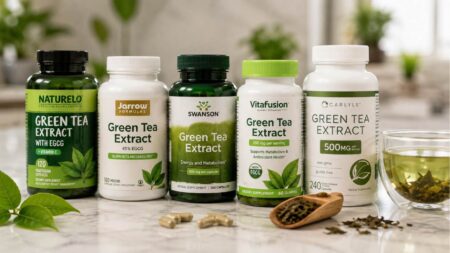
Named examples help you calibrate a fair price and dose before you buy. Compare these 5 established brands:
- NOW Foods Green Tea Extract delivers 400 mg of EGCG per capsule at roughly $0.25 per serving.
- Life Extension Mega Green Tea Extract provides about 326 mg of EGCG from a 725 mg full-spectrum formula.
- Jarrow Formulas Green Tea 500 mg pairs roughly 250 mg of EGCG with natural caffeine near 30 mg.
- Thorne Green Tea Phytosome delivers 400 mg of EGCG equivalents through enhanced phytosome delivery.
- BulkSupplements Green Tea Extract Powder lets you weigh out a custom EGCG dose from a bulk container.
Price per serving ranges from roughly $0.25 to $1.00 depending on the delivery technology and certification level. You pay more for phytosome-bound formulas because the enhanced absorption reduces the milligram dose you need.
How to Dose Green Tea Extract Safely
To dose green tea extract safely, start with 250-300 mg of EGCG per day and take it with food. Most clinical studies use 200-800 mg of EGCG daily, with 400-600 mg as the evidence-based sweet spot. Increase your dose gradually over 2 weeks if your body tolerates the starting amount well.
Safe Daily EGCG Range
The European Food Safety Authority issued a 2018 guidance linking EGCG doses above 800 mg per day to signs of liver stress. Limit yourself to 3 servings or fewer per week if your product contains more than 500 mg of EGCG per capsule. If you weigh less than 60 kg (132 lbs), start at the lower end of the range and monitor your response over 14 days.
Best Time to Take Green Tea Extract
Take your capsule with breakfast or lunch to reduce stomach irritation and lower peak liver exposure. Taking EGCG on an empty stomach raises plasma concentration and hepatic stress significantly. Avoid a caffeinated version within 6 hours (0.25 days) of bedtime to protect your sleep quality.
Adjust your target dose to your body weight for a more precise starting point. A person weighing 50 kg (110 lbs) does well starting at around 250 mg of EGCG daily, while a person weighing 90 kg (198 lbs) can often tolerate the 400-500 mg range. Reassess your dose every 4 weeks based on digestion, sleep quality, and energy levels.
What Are the Best Green Tea Extract Supplement Formats?
Green tea extract comes in 4 main formats: capsules, powder, liquid drops, and phytosome-enhanced capsules. Phytosome-bound EGCG delivers 3 to 5 times higher bioavailability than a standard extract, based on a 2009 study by Pietta and colleagues. You pay a premium price for phytosome technology, but you need a lower dose to reach the same blood concentration.
Capsules from brands like NOW Foods and Jarrow Formulas offer convenience and exact dosing. Powders such as BulkSupplements let you adjust your serving size, though they carry a bitter taste. Liquid drops from brands like Horbaach suit people who dislike swallowing capsules. Many buyers pair their extract with additional fat-metabolism ingredients covered in our best weight loss products guide, which reviews full-spectrum fat-burning formulas.
Match the format to your daily routine rather than to marketing claims. A busy professional benefits from a single capsule with breakfast, while a home cook may prefer powder mixed into a morning smoothie. A caffeine-sensitive reader should default to a decaffeinated capsule and skip liquid extracts that vaguely list caffeine content.
What Side Effects Should You Watch for With Green Tea Extract?
Green tea extract can cause 5 common side effects: nausea, stomach upset, headaches, jitters, and reduced iron absorption. High-dose EGCG intake above 800 mg per day has been linked to rare cases of liver toxicity, based on FDA and EFSA safety reviews. Stop use and contact a doctor if you notice yellowing skin, dark urine, or unusual fatigue.
Pregnant women, nursing mothers, and people on blood-thinning medication should avoid green tea extract supplements. Separate your iron supplement dose by at least 2 hours to prevent interference with absorption. People with existing liver conditions need medical clearance first. If cortisol-driven weight gain is your main concern, our L-carnitine fat burners guide covers a gentler, non-stimulant alternative.
EGCG can also interact with certain beta-blockers and thyroid medications by altering how your liver processes them. Ask a pharmacist to review your current prescriptions before you add a concentrated extract to your routine. Diabetic readers on insulin or sulfonylurea drugs should monitor blood sugar closely during the first 2 weeks, since catechins can mildly affect glucose metabolism.
How to Choose Green Tea Extract Supplements in Bangladesh
To choose green tea extract supplements in Bangladesh, prioritize brands with English-language certificates of analysis and confirm the seller uses proper cold-chain handling. Humid storage conditions common across Dhaka and Chattogram can degrade EGCG potency faster than in temperate climates. Store your capsules in a sealed container away from direct sunlight and moisture.
Buy from verified pharmacy chains or authorized online retailers rather than unverified marketplace listings. Check the expiration date and batch number on arrival, since imported supplements can sit in transit for 60 to 90 days. Pair your green tea extract supplement with a balanced diet rich in vegetables, lean protein, and whole grains for stronger metabolic results.
What Does Green Tea Extract Cost in Bangladesh?
Imported green tea extract supplements typically cost between 1,800 BDT and 4,500 BDT (about $15 to $38) per 60 to 120 capsule bottle, depending on brand and customs duty. Halal-certified formulas and GMP-certified facilities add a modest premium but reduce your risk of undisclosed animal-derived capsule materials. During the monsoon months from June through September, choose sellers who ship in moisture-sealed packaging to protect capsule potency.
Quick-Reference: Daily Green Tea Extract Routine
Use this table to build a simple, repeatable routine around your green tea extract supplement.
| Task | Timing | Method | Difficulty |
| Take EGCG dose | With breakfast or lunch | Swallow capsule with food and water | Easy |
| Check third-party COA | Before purchase | Review brand website or request the certificate | Easy |
| Monitor initial response | First 14 days | Track digestion, sleep, and heart rate daily | Moderate |
| Separate from iron supplements | 2 hours apart | Schedule doses at different meals | Easy |
| Cycle off the supplement | Every 8 to 12 weeks | Stop use for 2 to 4 weeks, then resume | Moderate |
Frequently Asked Questions
Does Green Tea Extract Help You Lose Weight?
Yes. Green tea extract produces a modest fat-loss effect, about 1.2 kg over 12 weeks compared with placebo, based on a 2009 meta-analysis by Hursel and colleagues.
Is 500 mg of Green Tea Extract Too Much?
No. 500 mg of EGCG falls within the safe 400 mg to 600 mg daily range for most healthy adults when taken with food.
Should You Take Green Tea Extract With Food?
Yes. Taking it with meals lowers stomach irritation and reduces peak liver exposure.
Can You Take Green Tea Extract Every Day?
Yes. Daily use is safe for most adults when EGCG intake stays under 800 mg, though cycling every 8 to 12 weeks is a reasonable precaution.
Does Decaf Green Tea Extract Work as Well as Caffeinated Versions?
No. Caffeinated formulas produce stronger thermogenic effects, though decaf versions still deliver EGCG’s antioxidant and AMPK benefits.
How Do You Know a Green Tea Extract Supplement Is Working?
You know a green tea extract supplement is working when you notice steadier energy, easier workout recovery, and a smaller appetite between meals. Most users report noticeable changes within 4 to 8 weeks of consistent daily use. Track your waist measurement in centimeters and inches every 2 weeks rather than relying on the bathroom scale alone, since water weight and muscle gain can mask fat-loss progress.
Your Next Step Toward a Faster Metabolism
The best green tea extract supplements for metabolism in 2026 pair a standardized 300 mg to 500 mg EGCG dose with verified third-party testing and a caffeine level suited to your routine. Start with a lower dose, take it with food, and track your response over the first 14 days. If stress-related weight gain is part of your picture, explore our rhodiola weight loss guide for a complementary, non-stimulant option that supports your goals from a different angle.