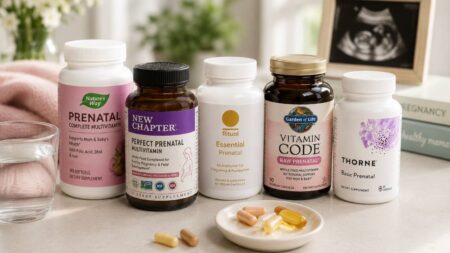
The best prenatal vitamins in 2026 combine methylfolate, iron bisglycinate, vitamin D3, choline, and DHA at clinically supported doses. You get real protection only when a formula delivers these 5 nutrients at therapeutic levels, not token amounts.
This guide ranks the best prenatal vitamins for 2026, breaks down nutrient needs by trimester, and shows you how to lower common side effects. You will also find a quick-reference table and 5 direct answers to the questions you ask most about prenatal vitamins.
What Are the Best Prenatal Vitamins for 2026?
The best prenatal vitamins for 2026 are formulas built around 8 core nutrients: folate, iron, vitamin D3, choline, DHA, iodine, zinc, and vitamin B12. A formula earns a spot on this list only when it delivers therapeutic doses of at least 5 of these 8 nutrients.
Your nutrient needs increase sharply during pregnancy. Folate needs rise by 50%, while iron needs rise by 150% compared with your needs before pregnancy. Most regular multivitamins fall short of both targets, which is why a dedicated prenatal formula works better for you than a general multivitamin.
What Nutrients Should You Look for in Prenatal Vitamins?
A strong prenatal vitamin covers 8 nutrients at once: folate, iron, vitamin D3, choline, DHA, iodine, zinc, and vitamin B12. Each nutrient supports a distinct stage of your baby’s growth, from neural tube formation in week 4 to bone mineralization in the third trimester.
Iodine and zinc round out the list, supporting your thyroid function and your baby’s cell growth throughout every trimester. A gap in any single nutrient rarely causes a crisis on its own, but small gaps across several nutrients add up over 9 months of pregnancy.
Why Folate and Methylfolate Matter Most
To protect your baby against neural tube defects, you need 600 to 1,000 mcg of folate daily, starting 3 months before conception. Folic acid is the synthetic form added to most supplements, while methylfolate (5-methyltetrahydrofolate, or 5-MTHF) is the active form your body uses directly.
About 25% of the global population carries the MTHFR gene variant, which slows the conversion of folic acid into its usable form. If you carry this variant, a methylfolate-based formula works more efficiently for you than a folic-acid-only prenatal vitamin.
Why Choline and DHA Complete the Formula
Choline supports placental function and your baby’s brain development, yet up to 95% of pregnant women fall short of the 450 mg daily target. Very few prenatal vitamins provide more than 100 mg of choline per serving, so you may need a separate choline supplement to close this gap.
DHA, an omega-3 fatty acid, supports your baby’s brain, eyes, and nervous system throughout pregnancy. Aim for 200 to 300 mg of DHA daily, either through your prenatal vitamin or a dedicated best fish oil supplements guide if your formula runs low.
Why Does Third-Party Testing Matter for Prenatal Vitamins?
Third-party testing matters for prenatal vitamins because supplement labels are not independently verified before a product reaches the shelf. An outside lab such as NSF International, the U.S. Pharmacopeia (USP), or Labdoor checks that the capsule actually contains the folate, iron, and choline amounts printed on the bottle.
Without this step, you have no independent confirmation that a formula delivers its advertised dose of active ingredients. Several of the competing prenatal vitamin guides skip this detail entirely, even though testing status changes which formula is genuinely safer for you.
Ask 3 questions before you trust a prenatal vitamin brand: does the company publish a certificate of analysis, is the manufacturing facility NSF or cGMP certified, and does an independent reviewer confirm the potency claims. A confident yes to all 3 questions signals a formula worth your money.
Which Are the Top 6 Best Prenatal Vitamins for 2026?
6 prenatal vitamin brands stand out among the best prenatal vitamins for 2026 for their nutrient completeness, testing standards, and real-world tolerability: Perelel, Ritual, FullWell, Thorne, MegaFood, and Nature Made. Each formula suits a different priority, from trimester-specific dosing to budget-friendly softgels.
Perelel Prenatal Pack splits nutrients across each trimester and adds ginger root extract and vitamin B6 during the first 12 weeks to ease nausea. The pack requires 4 capsules daily and delivers only 22% of your daily choline target, so pair it with a separate choline source. Each trimester-specific packet also adjusts calcium and magnesium levels, which helps you avoid manually swapping supplements as your pregnancy progresses.
Ritual Prenatal Multivitamin Capsules use 2 delayed-release capsules daily and include DHA, a nutrient not every prenatal contains. The formula supplies 167% of your daily folate value but only 10% of your choline value, leaving a nutrient gap you need to fill through diet. A mint or citrus outer coating on the capsule helps reduce the fishy aftertaste that discourages some pregnant women from staying consistent with their prenatal routine.
FullWell Prenatal Multivitamin covers 55% of your daily choline needs and 667% of your daily vitamin D value across 8 capsules per day. The formula skips iron entirely, which benefits you if your iron levels already run high, though you will need a separate iron supplement if lab work shows a deficiency. The 8-capsule dose splits easily across 2 or 3 smaller servings throughout the day, which many testers find easier to tolerate than one large dose.
Thorne Basic Prenatal delivers 167% of your daily iron value using ferrous bisglycinate, a chelated form that causes less stomach upset than standard iron salts. 3 capsules daily also provide folate and vitamin B6, though choline coverage stays limited at 20% of your daily target. Thorne manufactures this formula in an NSF-certified facility, which adds an extra layer of quality assurance beyond the label claims.
MegaFood Baby & Me 2 combines 170% of your daily folate value with 55% of your daily choline value in just 2 tablets. The formula lacks magnesium and omega-3s, so check your levels and consider pairing it with vitamin D3 supplements if lab work shows low vitamin D. The tablets use organic, plant-based ingredients and digest easily, so you can take them on an empty stomach without triggering nausea.
Nature Made Prenatal Folic Acid + DHA remains the most budget-friendly of the best prenatal vitamins on this list, delivering DHA and EPA in a single daily softgel for under $30. The formula omits choline entirely, so prioritize choline-rich foods such as eggs, lean meat, and lentils alongside this supplement. USP verification backs this formula, and wide retail availability makes it one of the easiest prenatal vitamins to restock without delay.
How Much Do the Best Prenatal Vitamins Cost in 2026?
Prices for the best prenatal vitamins in 2026 range from roughly $28 to $50 per 30-day supply, depending on nutrient density and capsule count. Nature Made sits at the affordable end near $28, while comprehensive multi-capsule formulas such as FullWell and Perelel sit closer to $50 per month.
A higher price does not always mean a more complete formula for your specific needs. Compare cost per nutrient gap you still need to close, not just the sticker price on the bottle, before you commit to a monthly subscription.
How to Choose the Right Prenatal Vitamin for Your Trimester
To choose the right prenatal vitamin for your trimester, match the formula’s nutrient emphasis to your current stage of pregnancy. Your nutrient priorities shift substantially between the first trimester and the third trimester, so one formula rarely fits your entire pregnancy perfectly.
First Trimester Nutrient Priorities
During your first trimester, prioritize folate, vitamin B6, and ginger-containing formulas if nausea disrupts your daily routine. Folate intake during the first 12 weeks matters most for preventing neural tube defects, so this window is not one to skip or delay.
Second and Third Trimester Nutrient Priorities
During your second and third trimesters, prioritize iron, calcium, and DHA as your baby’s skeleton and brain develop rapidly. Iron needs climb sharply across these final 2 trimesters, so a chelated iron form helps you avoid constipation while still meeting your target.
What Should Buyers in Bangladesh Consider When Choosing the Best Prenatal Vitamins?
If you are shopping for the best prenatal vitamins in Bangladesh, check 3 details before you buy: import authenticity, third-party testing, and halal or vegetarian certification. Many international brands ship through resellers, so confirm the seller sources directly from the manufacturer.
Look for a certificate of analysis (COA) from an independent lab such as NSF International or the U.S. Pharmacopeia (USP). A COA confirms that the capsule contents match the label, which matters when a product travels through several distributors before reaching you.
Iron-deficiency anemia affects a large share of pregnant women across South Asia, making iron content a priority when you compare prenatal vitamins. Pair your prenatal vitamin with iron-rich foods such as red meat, spinach, and lentils to close any remaining gap in your diet.
If you follow a halal or vegetarian diet, check the capsule shell material and the source of any omega-3 or vitamin D3 ingredient before you buy. Fish-derived DHA and lanolin-derived vitamin D3 require halal certification or a vegetarian alternative such as algal DHA and lichen-derived vitamin D3.
When Should You Start Taking Prenatal Vitamins?
Start taking a prenatal vitamin at least 3 months before you plan to conceive, so your body builds adequate folate stores in advance. If your pregnancy was not planned, start your prenatal vitamin on the day you confirm the pregnancy through a test.
Continue your prenatal vitamin through breastfeeding, since nutrient needs during lactation exceed even pregnancy-level demands in several categories. Talk with your OB-GYN about switching to a dedicated postnatal formula once you give birth.
How to Reduce Prenatal Vitamin Side Effects
To reduce prenatal vitamin side effects, take your capsule with food or shift your dose to the evening if morning sickness hits you hard. Nausea and constipation remain the 2 most common complaints among pregnant women taking prenatal vitamins daily.
Choose a chelated iron form such as iron bisglycinate, since this form causes noticeably less stomach upset than ferrous sulfate. Drink at least 2 liters (8 cups) of water daily and add fiber-rich foods to your meals to prevent constipation from iron supplementation.
If pills feel too large to swallow, switch to a gummy, liquid, or powdered format instead of skipping your prenatal vitamin altogether. Ask your pharmacist or OB-GYN before combining your prenatal with additional iron, calcium, or vitamin D supplements to avoid excess intake.
Track your symptoms for 2 full weeks after any formula change, since your body needs time to adjust to a new nutrient profile. If nausea, constipation, or headaches persist beyond 2 weeks, contact your OB-GYN rather than stopping your prenatal vitamin on your own.
Prenatal Vitamin Nutrient Targets by Task
Use this table to track your prenatal vitamin tasks against timing, method, and difficulty at each stage of pregnancy.
| Task | Timing | Method | Difficulty |
| Start folate supplementation | 3 months before conception | 600-1,000 mcg methylfolate daily | Easy |
| Add choline support | Before week 12 | 450 mg total from diet and supplement | Moderate |
| Increase iron intake | Second trimester onward | 18-27 mg chelated iron daily | Moderate |
| Add DHA supplementation | Throughout pregnancy | 200-300 mg DHA daily | Easy |
| Check vitamin D levels | Each trimester | Blood test plus 1,000-4,000 IU as needed | Easy |
| Manage nausea | First trimester | Evening dose, food, ginger, B6 | Moderate |
| Switch to postnatal formula | After delivery | Consult OB-GYN, adjust iron and DHA dose | Easy |
Frequently Asked Questions About the Best Prenatal Vitamins
Do prenatal vitamins help you get pregnant?
Yes, prenatal supplements show a measurable benefit for fertility in clinical research. Folate, vitamin B12, and vitamin D deficiencies specifically reduce your chances of conceiving, so correcting these gaps early helps.
Are prescription prenatal vitamins better than store-bought ones?
No, prescription prenatal vitamins are not automatically better than over-the-counter options. What matters most is nutrient completeness and third-party testing, not whether a doctor writes the prescription.
Do prenatal vitamins cause nausea?
Yes, prenatal vitamins can cause nausea, especially formulas with high iron doses taken on an empty stomach. Switching to an evening dose, taking your capsule with a small snack, or moving to a gummy format often resolves this issue within a few days.
Can you take prenatal vitamins without being pregnant?
Yes, many women take prenatal vitamins for at least 3 months before conception to build folate stores. Some also continue prenatal vitamins after breastfeeding ends if a healthcare provider recommends ongoing supplementation for continued nutrient support.
What should you avoid in prenatal vitamins?
Avoid prenatal vitamins containing black cohosh, goldenseal, dong quai, or yohimbe, since these herbs carry pregnancy-specific safety concerns. Always check the full ingredient list before choosing a formula, not just the front-label claims.
Final Thoughts on Choosing the Best Prenatal Vitamins for 2026
Choosing among the best prenatal vitamins for 2026 comes down to matching folate, iron, choline, and DHA doses to your specific trimester and health profile. No single formula on this list covers every nutrient at a perfect dose, so expect to pair your prenatal vitamin with 1 or 2 targeted supplements based on your own lab results. Talk with your OB-GYN before switching formulas, and recheck your nutrient levels through routine lab work each trimester. For additional support during pregnancy, browse our vitamin K supplements guide for options that support healthy blood clotting and bone development alongside your prenatal routine.