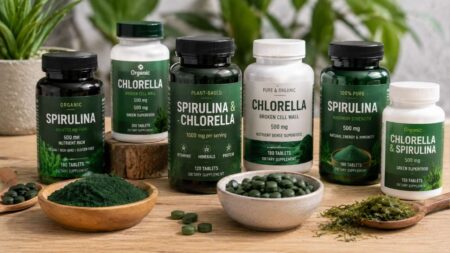
The best spirulina and chlorella supplements in 2026 combine third-party heavy metal testing, a cracked cell wall for chlorella, and a minimum 3,000 mg combined daily dose. Triquetra Organic Spirulina and Chlorella, NOW Foods Certified Organic Spirulina, and Thorne Chlorella Sorokiniana rank as the top 3 picks this year based on purity, dose clarity, and certification.
You get two distinct micro-algae in this supplement category. Spirulina is a blue-green cyanobacteria, scientific name Arthrospira platensis, prized for protein and phycocyanin. Chlorella is a green freshwater algae, scientific name Chlorella pyrenoidosa or Chlorella vulgaris, prized for chlorophyll and detox support.
Search interest in algae supplements grew after Google’s May 2026 core update rewarded pages with genuine product testing and clear sourcing details over generic listicles. This guide follows that standard. You get 7 ranked supplements, a dosage chart, storage advice for Bangladesh’s hot and humid climate, and a safety checklist before you buy.
Global demand for spirulina and chlorella keeps climbing as more buyers search for plant-based protein and micronutrient sources outside meat and dairy. Bangladesh’s own supplement market reflects this shift, with more pharmacies and online retailers stocking imported algae tablets and powders than 3 years ago.
Spirulina vs Chlorella: What Is the Real Difference?
Spirulina delivers more protein and B vitamins, while chlorella delivers more chlorophyll and binds heavy metals more effectively. You should pick based on your primary health goal, not brand popularity.
Spirulina contains 60 to 70 percent protein by weight, roughly 3 times more protein than red meat per gram. Chlorella contains 45 to 60 percent protein and up to 1,000 times more chlorophyll than kale. Both algae supply a nearly complete amino acid profile, which matters if your regular diet runs low on animal protein.
Nutrient Profile Comparison
Spirulina supplies phycocyanin, an antioxidant pigment unique to blue-green algae, plus gamma-linolenic acid (GLA), an anti-inflammatory fatty acid rarely found in plant foods. Chlorella supplies chlorophyll, Chlorella Growth Factor, and nucleic acids that support cell repair and skin health.
A 2026 clinical comparison recorded a measurable drop in diastolic blood pressure among spirulina users, while chlorella showed no significant change in blood pressure or lipids in the same trial (PMID: 40289965). This means spirulina, not chlorella, currently holds stronger cardiovascular evidence. Chlorella still leads in detoxification research, particularly for binding cadmium and dioxins.
Many Bangladeshi households already pair the best fish oil supplements with algae for a broader combination of omega-3 fats, chlorophyll, and plant-based antioxidants. This stacking approach covers both the essential fatty acid gap and the micronutrient gap that a typical rice-based diet can leave behind.
Which Algae Fits Your Goal
Choose spirulina if you want more protein, better athletic recovery, or blood pressure support. Choose chlorella if you want heavy-metal detoxification, digestive support, or higher chlorophyll intake. Must choose a 50-50 blend if you want both benefits in a single product without buying 2 separate containers.
Athletes and people recovering from illness often benefit most from combining both algae. Office workers seeking a simple multivitamin replacement usually do well with spirulina alone.
What Are the Science-Backed Benefits of Spirulina and Chlorella?
Spirulina and chlorella support immune function, cardiovascular health, and detoxification through documented mechanisms, not marketing claims alone. Both algae also provide plant-based iron, a nutrient that many Bangladeshi diets fall short of.
Immune and Energy Support
Spirulina’s phycocyanin content increases natural killer cell activity, a key part of your immune response. Chlorella’s beta-glucan content also activates macrophages, the immune cells responsible for clearing pathogens.
Both algae supply iron, B12 analogs, and folate that support red blood cell production. This combination reduces fatigue linked to mild iron deficiency, a common issue among Bangladeshi women and vegetarians.
Detoxification and Gut Support
Chlorella binds to heavy metals and certain pesticide residues in your digestive tract, then carries them out through normal elimination. This binding action works best when you take chlorella consistently, not as a single high dose.
Spirulina and chlorella both feed beneficial gut bacteria through their fiber and polysaccharide content. If your routine already includes one of the best probiotic supplements, algae’s polysaccharides complement the live bacteria strains you are already taking, since both work on gut lining health from different angles. Regular users report reduced bloating within 2 to 4 weeks of consistent use.
Algae fiber also slows sugar absorption slightly after meals, which helps stabilize energy levels through the afternoon. This effect works best when you take your dose alongside a carbohydrate-containing meal rather than on an empty stomach.
How to Choose the Best Spirulina and Chlorella Supplements
To choose the best spirulina and chlorella supplements, you check 4 factors: strain identity, cell wall processing, contaminant testing, and certified organic status. Skipping any one of these 4 checks raises your risk of buying a low-quality product.
Look for the exact strain name printed on the label. Chlorella pyrenoidosa outperforms Chlorella vulgaris in nutrient bioavailability and taste. Spirulina should list Arthrospira platensis, the species with the strongest research base among blue-green algae.
Check Cell Wall Processing
Chlorella has the toughest cell wall of any plant, so raw chlorella passes through your gut undigested. Manufacturers crack this wall using 1 of 3 methods: high-heat milling, glass-bead grinding, or ultrasound vibration.
Ultrasound processing preserves more heat-sensitive nutrients than milling or glass-bead methods. Products from brands like Thorne and Raw Power use pressure-release or ultrasound methods that open more than 99 percent of the cell wall, which improves nutrient absorption.
Verify Heavy Metal Testing
Algae absorbs contaminants from the water it grows in, including lead, mercury, and cadmium. You should only buy products that publish batch-level heavy metal test results on their website or packaging.
NSF Certified for Sport and USDA Organic certification both require documented contaminant testing before a product earns the label. Brands such as Thorne, Nutrex Hawaii, and Micro Ingredients publish this data through certificates of analysis available on request.
Confirm Organic and Non-GMO Status
USDA Organic certification confirms your spirulina or chlorella grew without synthetic pesticides or fertilizers. Non-GMO verification matters less for algae, since spirulina and chlorella are naturally occurring species rather than genetically modified crops.
Ask suppliers whether the algae grew in open ponds or closed photobioreactor systems. Closed systems reduce contamination risk from wild bacteria, birds, and agricultural runoff.
Top 7 Best Spirulina and Chlorella Supplements of 2026
The top 7 best spirulina and chlorella supplements of 2026 are NOW Foods Certified Organic Spirulina, Nutrex Hawaiian Spirulina, Thorne Chlorella, Triquetra Organic Spirulina and Chlorella, Micro Ingredients Organic Spirulina Powder, Snap Supplements Spirulina and Chlorella Capsules, and Sunlit Organics Spirulina and Chlorella Tablets. Each product suits a different budget, goal, and format.
- NOW Foods Certified Organic Spirulina delivers USDA Organic tablets at $0.03 to $0.05 per gram, making it the top value pick of the group. The brand publishes contaminant testing summaries and uses non-irradiated processing.
- Nutrex Hawaiian Spirulina grows in enclosed ponds on Hawaii’s Kona coast, away from urban pollution and agricultural runoff. Reviewers rate its taste as milder than most competing brands, and it ships as tablets or loose powder.
- Thorne Chlorella uses a fermentation process to break down the cell wall of Chlorella sorokiniana, thereby improving bioavailability beyond that of standard milling. NSF Certified for Sport status makes it the top pick for tested athletes.
- Triquetra Organic Spirulina and Chlorella blends both algae at a 50-50 ratio in a single capsule. This combo formula suits buyers who want simplicity over customizing 2 separate doses.
- Micro Ingredients Organic Spirulina Powder costs $0.05-$0.07 per gram and blends easily into smoothies. USDA Organic certification and a neutral tub design make it the top powder pick for daily use.
- Snap Supplements Spirulina and Chlorella Capsules combine spirulina and chlorella with alfalfa, wheatgrass, barley grass, and kale in 1 formula. This greens-blend option suits buyers who want broader coverage beyond pure algae.
- Sunlit Organics Spirulina and Chlorella Tablets offer a budget-friendly, cold-pressed option that is widely available on Amazon. Beginners who want to test algae supplements before committing to a larger container often start here.
Prices convert to roughly 250 to 950 Bangladeshi Taka (BDT) per 100 grams, depending on brand and shipping method. Import duty adds 10 to 30 percent on supplements shipped directly into Bangladesh, so factor this into your total cost before ordering.
How to Take Spirulina and Chlorella Safely
To take spirulina and chlorella safely, you start with 1 to 3 grams per day for the first week, then increase gradually toward your target dose. Sudden high doses commonly cause nausea, bloating, or loose stools in first-time users.
Take your dose with food to reduce digestive discomfort. Split larger doses into 2 servings, 1 in the morning and 1 in the early afternoon, to improve absorption and reduce stomach upset. Avoid taking algae supplements right before bed, since some users report mild energy effects that disrupt sleep.
Recommended Daily Dosage
Adults take 3 to 6 grams of spirulina or chlorella per day for general wellness support. Clinical studies commonly use 4 to 6 grams, roughly 1 to 1.5 teaspoons, per day to produce measurable effects on cholesterol or blood pressure.
For simple immune support, 5 grams, about 1 teaspoon or 20 tablets of 250 mg each, covers most adult needs. Athletes recovering from intense training take up to 10 grams, roughly 2 teaspoons, split across 2 doses per day.
How to Mix Spirulina and Chlorella Powder
To mix spirulina and chlorella powder, you add 1 teaspoon, about 5 grams, to 8 fluid ounces (240 ml) of water, juice, or a fruit smoothie. Blend immediately, since algae powder settles and clumps within minutes if left standing.
Pair the powder with citrus, berries, or ginger to mask the strong marine flavor. Tablets avoid the taste issue entirely but require swallowing 10 to 20 pills per full dose.
What Storage Conditions Protect Spirulina and Chlorella in Bangladesh’s Climate?
To protect spirulina and chlorella in Bangladesh’s climate, you store tablets and powder in an airtight container below 77°F (25°C) and away from direct sunlight. Humidity above 60 percent speeds up nutrient loss and clumping in algae powder.
Dhaka’s monsoon humidity regularly exceeds 80 percent between June and September. Add a food-safe silica gel packet inside your storage jar during these months to protect potency and prevent mold growth.
Refrigeration extends shelf life for opened powder from 6 months to 12 months. Keep tablets in their original blister packaging until use, since loose tablets absorb moisture faster than sealed packs and lose potency sooner.
Who Should Avoid Spirulina and Chlorella Supplements?
Pregnant women, people with autoimmune conditions, and people with phenylketonuria should avoid spirulina and chlorella supplements without medical clearance. Algae supplements can also interact with blood thinners like warfarin due to their vitamin K content.
People with seafood or iodine allergies sometimes react to algae-based products, since some spirulina batches carry trace iodine. Anyone taking immunosuppressive medication should consult a doctor first, as spirulina can stimulate immune activity that may counteract certain treatments.
Children under 12 take reduced doses, typically half the adult amount, and only under a pediatrician’s guidance. Stop use immediately if you notice a rash, swelling, or difficulty breathing after your first dose.
Quick-Reference: Building Your Spirulina and Chlorella Routine
| Task | Timing | Method | Difficulty |
| Start spirulina | Morning, with breakfast | 1 gram in water or smoothie | Easy |
| Start chlorella | Morning, with breakfast | 1 gram in water or juice | Easy |
| Increase to full dose | Week 2 onward | Add 1 gram every 3 days | Easy |
| Split daily dose | Morning and afternoon | Half dose each session | Easy |
| Store powder | Daily, after each use | Airtight jar, cool dark spot | Easy |
| Check heavy metal report | Before first purchase | Review brand’s certificate of analysis | Moderate |
| Rotate spirulina and chlorella | Monthly | Alternate 30-day cycles | Moderate |
Frequently Asked Questions
Is it safe to take spirulina and chlorella together every day?
Yes, spirulina and chlorella are safe to take together daily at 3 to 6 grams combined for most healthy adults.
Can spirulina and chlorella help with iron deficiency?
Yes, spirulina supplies iron at levels roughly 48 times higher than spinach by weight, which supports iron-deficient diets common across Bangladesh.
Do spirulina and chlorella supplements expire?
Yes, unopened algae supplements last 2 to 3 years, while opened powder loses potency after 6 to 12 months of air exposure.
Is chlorella better than spirulina for detox?
Yes, chlorella binds heavy metals and toxins more effectively than spirulina due to its higher chlorophyll and fiber content.
Can vegetarians and vegans take spirulina and chlorella?
Yes, both algae are 100 percent plant-based and provide complete amino acid profiles suitable for vegetarian and vegan diets.
Conclusion: Build Your 2026 Algae Routine
Spirulina and chlorella supplements give you concentrated plant protein, chlorophyll, and antioxidants in a single daily dose. Pick a product with published heavy metal testing, the correct strain name, and a dose that matches your goal. Start low, increase gradually, and store your supply correctly through Bangladesh’s humid months to protect potency.
Algae works best as part of a wider nutrition plan rather than a standalone fix. Explore our best herbal supplements guide for additional daily options that pair well with your new spirulina and chlorella routine, then build a stack that fits your specific health goals for 2026.