The softness and sensitivity of baby hair make it desirable to avoid harsh cleansing agents. Instead, opt for a chemical-free shampoo to avoid harmful chemicals that can harm your scalp and cause skin diseases when you purchase shampoo. You must consider factors like fragrance, lather, and packaging, but also consider the benefits it should provide. You can also benefit from using organic shampoos, just like you would with your food. Chemical shampoos may not be tested for user safety. It may contain harmful ingredients. Also, it may not be good for your scalp or health. To find a good chemical-free shampoo, gather information about the chemicals present in your shampoo and avoid certain ingredients in the future.
Ingredients to Avoid When Buying Shampoo
Avoid using Phthalates in shampoos, which increase scent longevity but pose risks like cancer, reproductive defects, endocrine system issues, and respiratory disruption. Opt for artificial fragrance-free shampoos to avoid these chemicals.
Selecting a chemical-free shampoo should avoid DEA, MEA, and TEA, which are carcinogenic and cause organ system breakdown, and BHA and BHT, which are neurotoxic and cause health issues like nervous system breakdown, reproductive defects, and hormone disruption.
Reasons to choose chemical-free shampoo
Chemicals found in most shampoos pose health risks, making switching to a chemical-free shampoo essential. A good brand of chemical-free shampoo is necessary, as it is tested for high-quality products and infused with natural seed oils for conditioning. These shampoos include Olefin Sulfonate, an alternative to SLES and SLS, and are devoid of sulfates, parabens, DEA, TEA, MEA, Dioxane, and BHA/BHT. The range includes Color Protection Moisturizing Shampoo, Juvexin Shield Shampoo, Anti-Dandruff Shampoo, Balancing Shampoo, and Gold Shampoo, ensuring the best-quality natural products are used.
Why It’s Important to Read the Ingredients
Don’t believe the myth that ingredient label reading is only relevant at the grocery store! The things you put on and put into your body are both significant.
Shampoo manufacturers determine safety, but consumer decision-making is ultimately up to consumers. Several substances have been outlawed in the US, 500 in Canada, and 1,300 in Europe. This raises questions about firms’ long-term viability and ability to determine safe skin use, as the skin, covering 64% of its surface, absorbs the substances.
Congress introduced cosmetic standards, which cover shampoo, in 1938. Even though a lot has changed since the middle of the 20th century, the government has not yet established safety criteria for cosmetic substances!
In what ways does that affect shampoo? Few ingredients are off-limits in cooking. Your daily hair care products contain questionable, chemical-filled substances. You must choose from the various items on your own if you wish to avoid unpleasant and perhaps hazardous components because there is no governing agency. The Environmental Working Group (EWG) and other charities are, fortunately, on the same page. They aid customers like you in making safe product selections.
For a natural, gentle shampoo, avoid certain ingredients like alcohol, parabens, and phosphates, as they can irritate.
Chemical-Free Shampoo: Ingredients to Avoid
Sulfates
Sulfates are necessary in the beauty sector to produce lather and foam in shampoos, giving them a clean feeling. However, they deplete natural oils from the scalp and hair, which leads to dryness, irritation, and brittle hair. Shampoos without sulfates run the risk of causing skin sensitivity and reducing the longevity of colored hair. Ensure sulfate-free items are listed on labels for healthy hair preservation, but avoid SLS or SLES for a satisfying lather.
Parabens
Another item to avoid is parabens. it’s preservatives. You don’t want germs or mold to grow in your shampoo. But parabens can trigger allergic reactions and skin rashes. Worse, parabens are an endocrine disruptor. Parabens imitate your body’s hormones and interfere with how it functions.
Beware of shampoo preservatives with “paraben” in the second part of a word, such as:
- methylparaben
- propylparaben
- butylparaben
- ethylparaben.
Fragrances
The skin might get irritated by synthetic scents included in shampoos. It frequently comes in the form of fragrances or perfumes. These fragrances can contain various chemicals. Its chemical names, like Ethanol, Camphor, or Citral, can identify it.
Formaldehyde
One of the worst things to discover on an ingredient list is that it is a confirmed carcinogen. Unfortunately, the name will not be found on a list but rather as an ingredient that releases over time. Quarternium-15 is the most prevalent component.
PEG’s
A rather contentious element because research has not shown it to be hazardous in and of itself, but because it is petroleum-derived, it is best avoided because petroleum filtration methods aren’t the greatest. Carcinogens are also a prevalent by-product of PEGs that do not need to be filtered away.
- Mamaearth Argan and Apple Cider Vinegar Shampoo
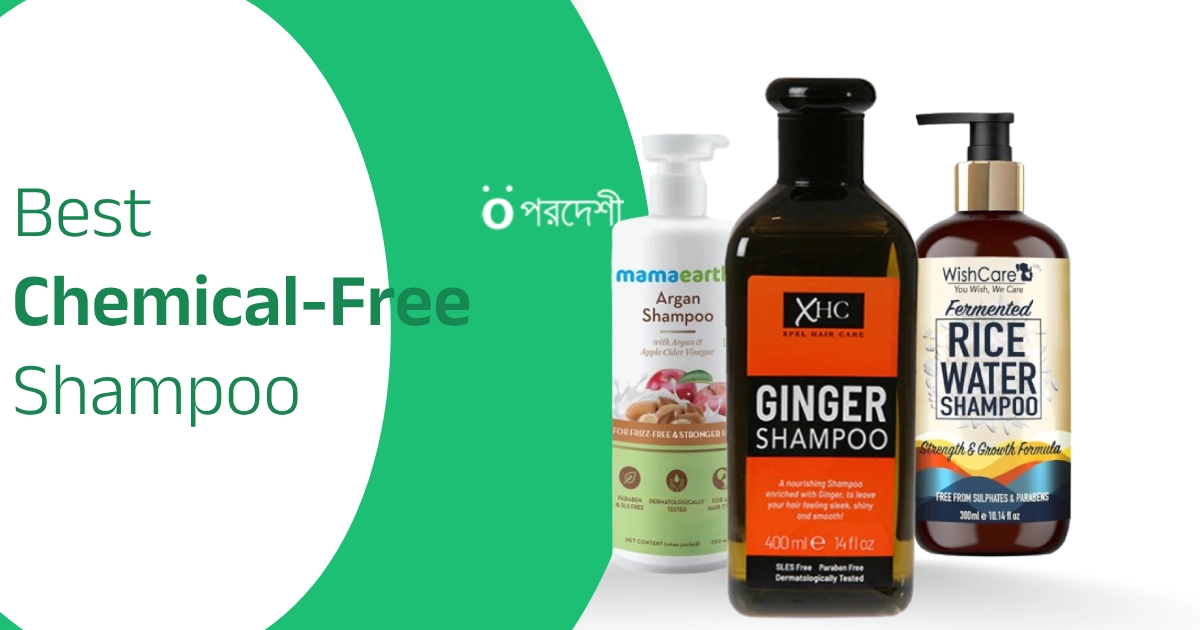
Mamaearth Argan and Apple Cider Vinegar Shampoo is a hair-friendly shampoo made with argan oil and apple cider vinegar. Argan oil is a natural moisturizer, while apple cider vinegar removes dirt, oil, and buildup. Mamaearth Argan and Apple Cider Vinegar Shampoos are free of sulfates, parabens, and other harsh chemicals. It’s suitable for all hair types. It’s also suitable for dry, damaged, and color-treated hair. The pleasant, citrusy scent adds a touch of luxury to the shampoo.
Price: BDT 699 (for 200 ml)
- Wishcare Fermented Rice Water Shampoo
This shampoo uses fermented rice water. It is a traditional Japanese hair care ingredient. To cleanse, soothe, and strengthen the scalp, Wishcare Fermented Rice Water Shampoo contains amino acids, vitamins, and minerals for hair health. This shampoo is also free of sulfates, parabens, and harsh chemicals, is suitable for all hair types, such as dry, damaged, and color-treated hair, and has a refreshing scent.
Price: BDT 599 (for 200 ml)
- Khadi Natural Ayurvedic Amla and Bhringraj Hair Cleanser
Khadi Natural Ayurvedic Amla and Bhringraj Hair Shampoo contains amla and bhringraj, two Ayurvedic herbs with hair-strengthening properties. Amla is high in vitamin C, preventing hair damage, and Bhringraj is a natural conditioner. Khadi Natural Ayurvedic Amla and Bhringraj Hair Cleansers are devoid of sulfates, parabens, and harsh chemicals. It is also suitable for all hair types.
Price: BDT 499 (for 200 ml)
- Good Vibes Amla and Shikakai Strengthening Shampoo with Neem shampoo
Good Vibes Amla and Shikakai Strengthening Shampoo with Neem Shampoo is made with amla, shikakai, and neem, three Ayurvedic herbs known for their hair-strengthening and clarifying properties. Amla is rich in vitamin C, while shikakai removes dirt and oil, and neem prevents dandruff and scalp infections. All hair types may use Good Vibes Amla and Shikakai Strengthening Shampoo. It has an earthy aroma and is devoid of sulfates, parabens, and harsh chemicals. This shampoo is suitable for dry, damaged, and color-treated cleaning.
Price: BDT 499 (for 200 ml)
- XHC Xpel Care Shampoo
Tea tree oil, aloe vera, and chamomile are all-natural ingredients in the XHC Xpel Care shampoo. XHC Xpel Care shampoo has moisturizing, relaxing, and antibacterial qualities. Sulfates, parabens, and harsh chemicals are absent from it. The XHC Xpel Care shampoo is suitable for all hair types, especially those with oily, dandruff-prone, and sensitive scalps. The shampoo has a pleasing touch thanks to its subtle herbal aroma.
Price: BDT 399 (for 400 ml)
Better Hair For You!
Don’t seek a pleasant smell or the quantity of lather it produces the next time you buy shampoo. Foamy lather is frequently thought to ensure hair cleaning; however, this is untrue. Sulfate shampoos produce more lather and make your hair look silky and smooth. In the end, sulfate shampoo really dries out your hair and causes dandruff. Chemical-free shampoo preserves hair texture, strengthens follicles, protects the scalp, and promotes new hair growth.