Millions of people worldwide deal with the annoying and widespread problem of lice infestations. Head lice are also known as Pediculus humanus capitis. These are little parasites that live in the hair and scalp and may be uncomfortable, itchy, and embarrassing. Anti-lice shampoos are becoming increasingly popular as a practical solution to lice. This article discusses their definition, main components, benefits, and essential factors to consider when selecting a product.
What exactly is anti-lice shampoo?
Anti-lice shampoo is a specialized hair care product designed to eliminate lice infestations. Anti-lice shampoo targets and removes lice and their eggs, disrupting the lice’s life cycle, preventing further infestations, and providing relief from lice discomfort. Anti-lice shampoo also focuses on cleansing the hair and scalp.
How does anti-lice shampoo work?
Anti-lice shampoo, also known as lice-killing shampoo, eliminates scalp and hair lice infestations by targeting and disrupting their life cycle, ultimately leading to their death. Here’s how anti-lice shampoo works:
Active ingredients: Anti-lice shampoos typically contain pesticides like permethrin and pyrethrins, which are synthetic and organic substances derived from chrysanthemum flowers. These are examples of common active ingredients in pesticides.
Neurotoxic action: Permethrin and pyrethrins work by poisoning the nerve system of lice to cause their death. Pesticides causing paralysis and death in lice cause nerve cell dysfunction, endangering aquatic life. Applying cautiously and following label directions is crucial.
Ovicide effect: In addition to killing adult lice, some anti-lice shampoos also have ovicidal properties, meaning they can kill lice eggs (nits). This helps prevent the eggs from hatching and re-infesting the scalp.
Repeat applications: Lice-killing shampoos often require multiple applications to be effective. This is because some lice may survive the first treatment, and the Eggs may not be affected by the shampoo. By reapplying the shampoo at a specific interval (usually 7–10 days), any surviving lice that have hatched from eggs since the last treatment can be targeted and eliminated.
Combing: In addition to shampooing, it’s common to use a fine-toothed nit comb to help remove dead lice and nits from the hair. This mechanical action can be an essential part of the treatment process.
Prevention: It’s crucial to take precautions after a successful treatment to prevent re-infestation. Avoiding the sharing of private objects like hats, hairbrushes, and hair accessories Checking periodically for lice to detect any possible re-infestation early.
Lice populations may develop resistance to certain anti-lice shampoos over time. Consult a healthcare professional or pharmacist for alternative treatments if the current product is ineffective. Some individuals prefer non-chemical or natural remedies, but their efficacy may vary.
Major Pharmaceuticals Facts about the lice-killing shampoo
Active substances
Pyrethrum extract piperonylbutoxide 4% (0.33% pyrethrins)
Inactive substances
Fragrance, isoparaffin, benzyl alcohol, xanthan gum, and polyoxyethylene phenyl ether
Uses
body, head, and pubic (crab) lice
Warnings
- Only for external usage
- Use with caution around the eyes, inside the mouth, nose, or vagina, and on lice in the brows or eyelashes. If you notice lice in these places, visit a doctor.
- If you have ragweed allergies, see a doctor before using it. may result in an asthma attack or difficulty breathing.
- When using this product, rinse your eyes with water if any product goes in them, and keep them securely closed. Itching or redness of the scalp may also occur.
- If breathing difficulties develop, stop using it and see a doctor.
- skin or eye discomfort happens
Directions
Important: Before using, read the cautions.
Adults and kids aged 2 and up:
Inspect
- Examine each member of the household for lice or nits (eggs) using a magnifying glass in direct sunlight.
- Start at the nape of the neck and behind the ears and look for microscopic nits close to the scalp.
- Examine a few hairs at a time, in tiny portions.
- While dandruff goes, nits remain in the hair.
- Use this medication to treat any newly discovered lice or nits.
Use guidelines for anti-lice shampoo
Step 1: TREAT
- Shake vigorously before use.
- Use towels to keep the child’s clothes from becoming wet and to shield the child’s eyes from harm.
- Thoroughly lather lice-killing shampoo into DRY HAIR or any other afflicted area.
- Lice may hold their breath while submerged in water, making it difficult for the active component to enter the lice. The treatment is less effective when the hair is wet since it is diluted.
- To eliminate head lice, massage shampoo into the scalp, ears, and neck, applying from roots to ends, as lice can move quickly.
- Give the product 10 minutes, but no more, to dry on the hair (or other afflicted area).
- To create a lather, add warm water and massage.
- Thoroughly rinse.
- Towel-dry hair and comb out tangles to remove head lice.
- To eliminate any newly born lice, a second treatment must be administered in 7 to 10 days.
Step 2: REMOVE
- After using the lice-killing shampoo (Step 1), combing is required. Combing eggs and nits is a necessary step to finish lice treatment.
- To remove lice, eggs, and nits from hair, use a fine-toothed comb or the special lice and nit removal comb (included).
- Prepare ahead of time by having extra towels on hand.
- Hair clips or bobby pins
- Paper towels or tissues for the face
- A standard comb for detangling and separating hair;
- Detangler/conditioner to facilitate combing.
- Find a diversion for your youngster (such as a book, television show, or game).
- Apply a detangler or conditioner, then use a standard wide-tooth comb to remove knots and snarls from moist hair.
- Hold the lice or nit comb so that you are facing the teeth.
- Remove any eggs or nits from the comb’s teeth with a tissue or paper towel.
- Use a bobby pin or hair clip to secure the 1- to 2-inch broad strand you just completed combing.
- Repeat the combing process with another 1- to 2-inch broad strand.
- After combing and pinning one area of hair, move on to the next section. Once the entire head has been combed and pinned,
- After combing and pinning one area of hair, move on to the next section. Once the entire head has been combed and pinned, continue combing the hair 1 to 2 inches at a time.
- When combing the hair, keep it moist and reapply conditioner or detangler as necessary.
- After combing and pinning the entire head, remove any hair clips or bobby pins, then give the hair a thorough wash with warm water. You may also wash with ordinary shampoo if you’d like.
- To stop the spread of lice, put all used tissues or paper towels into a bag, seal it, and throw it away.
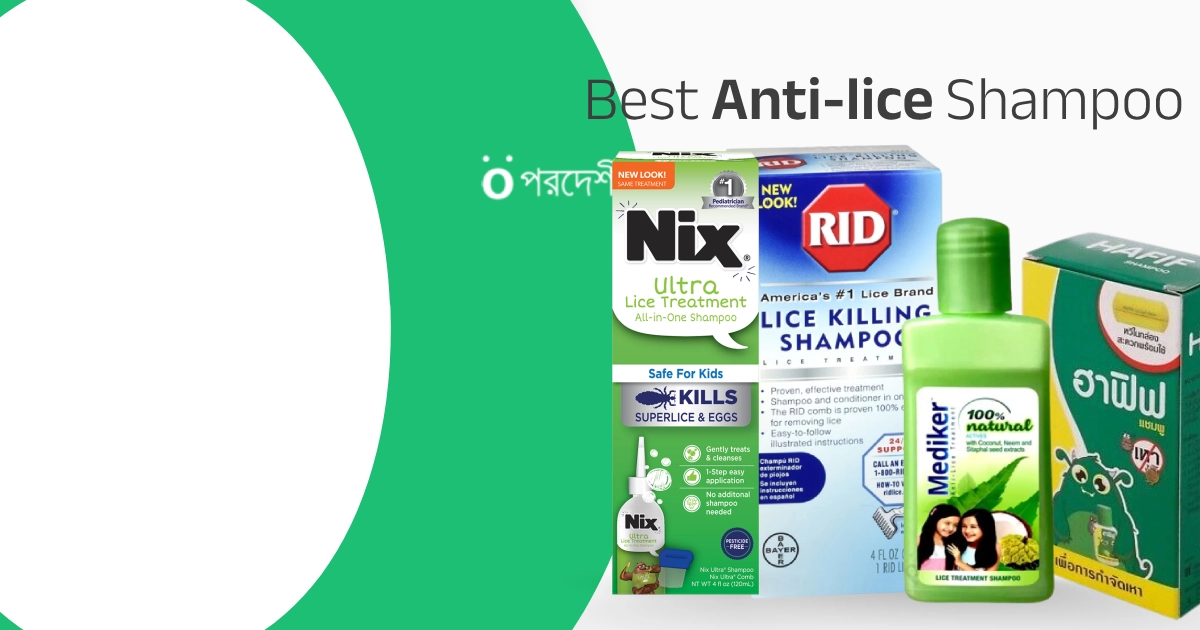
Hafif anti lice shampoo review
pros
- Inexpensive and efficient, it kills live bugs
Cons
- Does not eliminate lice eggs and is not offered on Amazon
Nin-Bite Anti-Lice Shampoo
pros
- Suitable for both adults and children
- Natural formulation
- Beneficial for sensitive skin
Cons
- As stated in the directions, this product is not technically a shampoo (it should be applied to dry hair and then washed out).
LiceFreee Everyday Shampoo
Pros:
- There are no harsh chemicals, which is excellent for children
- Useful for everyday usage
Cons
- Unfit for children under the age of two
Nix Ultra All-in-One Shampoo
pros
- Refreshing peppermint aroma
- Combats live lice as well as their eggs
- Harmless
Cons
- A greater pricing range
RID Super Max 5-in-1 Shampoo
Pros
- Family-friendly and secure
- Includes organic essential oils
- A nice odor
Cons:
- Following a lice treatment, the solution is most effective.
Frequently Asked Questions (FAQ)
How does anti-lice shampoo work?
Anti-lice shampoo kills lice and eggs by disrupting their nervous systems with insecticides like pyrethrins or permethrin, causing paralysis and death.
How often should I use anti-lice shampoo?
Anti-lice shampoo should be used twice, 7–10 days apart, to kill live lice and eggs. The first treatment kills the eggs, while the second treatment kills newly hatched lice.
Is anti-lice shampoo safe for children?
Anti-lice shampoos are generally safe for kids, but read labels carefully to avoid potential dangers.
What are the side effects of anti-lice shampoo?
Anti-lice shampoo often causes mild skin irritation and itching, with rare cases of allergic reactions.
What if I am allergic to anti-lice shampoo?
If you have allergies, avoid using anti-lice shampoo. Alternative therapies include using lice treatment ointment and brushing with a fine-tooth comb.
How do I know if the treatment worked?
Verify treatment effectiveness by combing hair with a fine-tooth comb to detect lice or eggs.