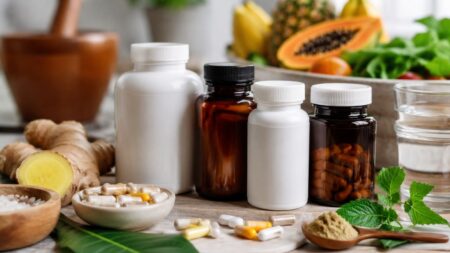
The best digestive enzyme supplements of 2026 combine amylase, protease, and lipase with targeted enzymes like lactase or alpha-galactosidase. These blends break down carbohydrates, proteins, and fats faster, easing bloating and gas within 30 to 60 minutes of a meal. This guide compares 8 top-rated formulas and shows you how to pick the right one for your symptoms.
What Are the Best Digestive Enzyme Supplements of 2026?
The best digestive enzyme supplements of 2026 pair a broad-spectrum enzyme blend with third-party testing and clear activity-unit labeling. These products list exact FCC (Food Chemicals Codex) or USP units for each enzyme, not just milligrams. A quality formula covers 3 core enzyme types: amylase for starch, protease for protein, and lipase for fat. Many 2026 formulas also add lactase, alpha-galactosidase, or bromelain for specific triggers like dairy, beans, and heavy protein meals.
You should check the label for 2 things before you buy: activity units and enzyme source. Plant-derived enzymes from sources such as Aspergillus and fungal cultures work across a wide pH range of 2.0 to 12.0. Animal-derived enzymes like pancreatin need a narrower pH window and suit people with low stomach acid or gallbladder issues.
How Do Digestive Enzymes Work in Your Body?
Digestive enzymes break large food molecules into small, absorbable pieces your intestine can use. Your mouth, stomach, pancreas, and small intestine each release enzymes at different stages of digestion. When 1 of these stages produces too few enzymes, undigested food ferments in your gut and causes gas, bloating, and cramping.
Saliva starts the process with salivary amylase, which clips long starch chains into shorter sugars before you even swallow. Stomach acid then activates pepsin, a protease that breaks large proteins into smaller peptide fragments. Your pancreas releases the bulk of your digestive enzymes once food reaches your small intestine, including amylase for carbohydrates, lipase for fats, and protease precursors that activate on contact with intestinal fluid. Specialized brush-border cells lining your small intestine finish the job with enzymes such as lactase, sucrase, and maltase, which convert remaining sugars into glucose, galactose, and fructose your bloodstream can absorb.
What Happens During Digestion Without Enough Enzymes
Undigested starches and sugars travel to your colon, where gut bacteria ferment them into gas. This fermentation produces the bloating and abdominal pressure you feel after a heavy meal. Fat that lipase doesn’t fully break down can also cause loose, greasy stools and a sense of fullness lasting 3 hours or longer.
The 3 Core Enzyme Types You Need
Every effective formula includes amylase, protease, and lipase as its foundation. Amylase splits starches such as rice, bread, and potatoes into simple sugars. Protease breaks proteins from foods including chicken, eggs, and lentils into peptides and amino acids. Lipase targets dietary fat from foods like ghee, oil, and dairy, converting it into fatty acids your body absorbs.
Who Needs Digestive Enzyme Supplements?
Adults with recurring bloating, gas, or heaviness after mixed meals benefit most from digestive enzyme supplements. Four groups see the clearest results: people with functional dyspepsia, lactose-intolerant adults, people who react to beans and cruciferous vegetables, and people on GLP-1 medications who experience slow stomach emptying.
Two randomized, placebo-controlled trials in people with functional dyspepsia found that multi-enzyme blends reduced pain, fullness, and bloating scores compared with placebo. Lactase shows the strongest evidence of any single enzyme: multiple double-blind trials confirm that a dose of 3,000 to 9,000 FCC units taken with dairy meaningfully lowers gas and bloating.
Healthy adults without a diagnosed deficiency don’t always need daily supplementation. A balanced diet with adequate fiber often covers normal digestive needs without added enzymes.
When Digestive Enzymes Won’t Help
Digestive enzymes address 1 job: breaking food down. They don’t speed up slow gut motility, repair a damaged gut lining, or rebalance your gut bacteria. If your main complaints are chronic constipation, alternating diarrhea, or diagnosed IBS, an enzyme supplement alone likely won’t resolve those patterns.
People taking protease supplements hoping for faster muscle recovery should also temper expectations. Small studies show certain protease blends can modestly speed up amino acid absorption from a protein shake, but they don’t reliably increase muscle gain, strength, or workout recovery over time. Your total protein intake, training consistency, and sleep quality matter far more than any enzyme supplement for that goal.
Top 8 Digestive Enzyme Supplements Compared
The table below ranks the top 8 formulas from 2026 competitor research by primary use, key enzyme strength, and price per serving.
| Product | Best For | Key Enzyme Strength | Price/Serving |
| Enzymedica Digest Gold with ATPro | Broad-spectrum daily use | Thera-blend protease and lipase across full pH range | $0.85 |
| Triquetra Flora Digest | General digestion plus probiotics | 67,500 FCC protease, 3,600 FCC lipase | $0.50 |
| Doctor’s Best Digestive Enzymes | Vegetarian diets | 500 GalU alpha-galactosidase, 1 billion CFU B. subtilis | $0.29 |
| Natural Factors Lactase Enzyme | Lactose intolerance | 9,000 FCC lactase | $0.33 |
| Pure Encapsulations Pancreatic Enzyme Formula | High-fat meals | 17,500 USP units lipase | $0.66 |
| Solaray Bean Enzyme | Gas from beans and vegetables | 300 GalU alpha-galactosidase | $0.20 |
| Thorne Advanced Digestive Enzymes | Low stomach acid | Betaine HCl, pepsin, ox bile, pancreatin 8X | $0.60 |
| Life Extension Food Sensitivity Relief (DAO) | Histamine intolerance | 20,000 HDU diamine oxidase | $0.43 |
Enzymedica Digest Gold with ATPro leads the list for people who want 1 formula for every meal. Its Thera-blend technology combines multiple strains of each enzyme, so it stays active across the full pH range of your digestive tract instead of working in only 1 narrow zone. Triquetra Flora Digest adds 2 probiotic strains and a postbiotic alongside its enzyme backbone, making it a strong pick if you also want microbiome support with your enzyme dose.
Doctor’s Best Digestive Enzymes suits vegetarian and plant-forward eaters because it skips animal-derived ingredients entirely while still covering beans, grains, and cruciferous vegetables through its alpha-galactosidase content. Natural Factors Lactase Enzyme delivers a single-purpose, clinically matched dose for anyone whose main trigger is dairy, without added fillers or extra enzymes you don’t need.
Pure Encapsulations Pancreatic Enzyme Formula stands out for high-fat meals such as fried foods, rich curries, or fatty cuts of meat, thanks to its acid-resistant capsule and high lipase content. Solaray Bean Enzyme costs the least per serving and targets 1 specific problem: gas from legumes and cruciferous vegetables like cauliflower and Brussels sprouts.
Thorne Advanced Digestive Enzymes takes a different approach from plant-based blends by replacing compounds your stomach and pancreas naturally produce, including betaine HCl and ox bile, which makes it a fit for people with low stomach acid or a removed gallbladder. Life Extension Food Sensitivity Relief (DAO) rounds out the list as the only formula in this group built specifically for histamine intolerance, using diamine oxidase instead of the usual amylase-protease-lipase trio.
How to Choose the Right Digestive Enzyme Supplement
To choose the right digestive enzyme supplement, match the formula to your specific trigger food first. Then check the activity units on the label against clinically studied doses before you buy.
Match the Enzyme to Your Symptom
Choose a lactase formula if dairy consistently causes gas or cramping within 1 hour of eating. Pick an alpha-galactosidase product if beans, lentils, or cruciferous vegetables such as broccoli and cabbage trigger your bloating. Select a high-lipase blend if heavy, oily meals leave you feeling full for 3 hours or longer.
Check the Activity Units, Not Just Milligrams
Look for FCC units on protease and amylase, USP or GDU units on lipase and bromelain, and GalU units on alpha-galactosidase. A label listing only milligrams without activity units often signals a weak or inconsistent formula. Compare the number against the clinically studied range: 4,500 to 9,000 FCC for lactase and 300 to 1,200 GalU for alpha-galactosidase.
Third-party testing matters as much as the dose itself. Look for certifications such as NSF, ISO 17025, or ISURA on the label or brand website, since these confirm an independent lab verified the enzyme potency and screened for contaminants. Brands that publish full activity units for every enzyme, rather than hiding behind a single proprietary blend number, generally give you a clearer picture of what you’re actually taking with each capsule.
If you already take a best probiotic supplements daily, pick an enzyme blend without added probiotic strains to avoid duplicate dosing. A separate enzyme-only formula also lets you adjust each supplement independently.
How to Take Digestive Enzyme Supplements for Best Results
To take digestive enzyme supplements correctly, swallow the capsule with the first 2 bites of your meal, not after you finish eating. Enzymes need to reach your stomach and small intestine while food is still present so they can work.
| Task | Timing | Method | Difficulty |
| Take multi-enzyme blend | With first 2 bites of a mixed meal | Swallow capsule with 8oz (240ml) water | Easy |
| Take lactase enzyme | 5 minutes before dairy | Chew or swallow tablet | Easy |
| Take alpha-galactosidase | Right before a bean-heavy dish | Swallow capsule with meal | Easy |
| Take high-lipase formula | With the first bite of a fatty meal | Swallow acid-resistant capsule | Moderate |
| Track your response | Over 14 days | Keep a daily symptom diary | Moderate |
Most people notice reduced bloating within 30 to 60 minutes when they time enzymes correctly. If your symptoms persist after 2 weeks of consistent use, the enzyme type likely doesn’t match your trigger food.
Are Digestive Enzyme Supplements Safe for Daily Use?
Yes, digestive enzyme supplements are safe for daily use in most healthy adults when taken at label doses. Clinical trials of multi-enzyme blends report side-effect rates similar to placebo, with mild gas or stool changes as the most common reaction.
Protease-heavy formulas containing bromelain or papain carry a higher risk for 2 groups: people on blood thinners and people with pineapple or papaya allergies. These proteases can thin blood slightly and trigger allergic reactions including skin rash or wheezing. Pregnant women, breastfeeding mothers, and young children should consult a doctor before starting a new enzyme blend, since safety data for these groups remains limited.
Stop the supplement and contact a doctor if you notice blood in your stool, unexplained weight loss, or persistent vomiting. These symptoms point to a condition an enzyme supplement cannot treat.
Digestive enzymes also aren’t a substitute for medical treatment in 3 specific situations: celiac disease, irritable bowel syndrome (IBS), and diagnosed exocrine pancreatic insufficiency. Enzyme blends marketed as gluten-digesting aids don’t reliably break down the toxic gluten fragments that trigger celiac reactions, so a strict gluten-free diet remains the only proven approach for that condition. If your doctor has diagnosed a specific enzyme deficiency, ask about prescription-strength pancreatic enzyme replacement therapy instead of relying on an over-the-counter blend alone.
Digestive Enzyme Supplements in Bangladesh: What to Know Before You Buy
Bangladesh’s average humidity stays above 70% for much of the year, and enzyme potency drops faster in hot, humid storage above 30°C (86°F). Store your enzyme capsules in a cool, dry cabinet away from direct sunlight, ideally below 25°C (77°F), to protect enzyme activity through the expiration date.
Check for halal certification and vegetarian capsule material if either matters to your diet. Many multi-enzyme blends use porcine-derived pancreatin, while plant-based formulas rely on Aspergillus and fungal fermentation instead. If you import supplements rather than buy locally, confirm the seller offers third-party testing documentation, since counterfeit supplements remain a documented problem in cross-border e-commerce.
Pair your enzyme routine with gut-supporting nutrition common in Bangladeshi diets, including fermented foods like yogurt-based borhani and fiber-rich vegetables. A colostrum supplement for gut health can also support your gut lining alongside enzyme use, particularly if you deal with frequent bloating.
Rich, oily dishes common across Bangladeshi cuisine, including beef bhuna, khichuri with ghee, and fried snacks like piyaju, place a heavy load on lipase and protease. If these meals consistently leave you feeling heavy for 3 hours or more, a high-lipase formula timed with the first bite often brings faster relief than a general digestive tonic. Always check the expiration date at purchase, since supplements that sit in un-air-conditioned shop storage during peak summer months can lose potency well before the printed date.
Frequently Asked Questions About Digestive Enzyme Supplements
Is it safe to take digestive enzyme supplements every day?
Yes, short-term daily use at label doses is safe for most healthy adults. Consult a doctor if you plan to use a high-dose protease blend for more than a few weeks.
Do digestive enzymes help you lose weight?
No, digestive enzymes don’t cause weight loss. They only help your body break down food you already eat; they don’t reduce calorie intake or boost metabolism.
What is the best digestive enzyme for bloating?
A broad-spectrum blend with amylase, protease, and lipase works best for general post-meal bloating. If a specific food like dairy or beans triggers your bloating, a targeted single-enzyme product often works better.
Can you take digestive enzymes with probiotics?
Yes, you can take digestive enzymes and probiotics together safely. Enzymes break down food while probiotics support your gut bacteria, so the 2 supplements address different parts of digestion.
How long do digestive enzymes take to work?
Most formulas start easing bloating and gas within 30 to 60 minutes of a meal. If you notice no change after 2 weeks of consistent, correctly timed use, switch to a different enzyme type.
Final Word on Choosing Your 2026 Digestive Enzyme Supplement
The best digestive enzyme supplements of 2026 match your specific trigger food with the right enzyme type and correct timing. Start with a broad-spectrum blend if your symptoms vary, or choose a targeted formula like lactase or alpha-galactosidase if you know your trigger. For more gut-support options, check Pordeshi’s guide to best TUDCA supplements for liver and digestive health.