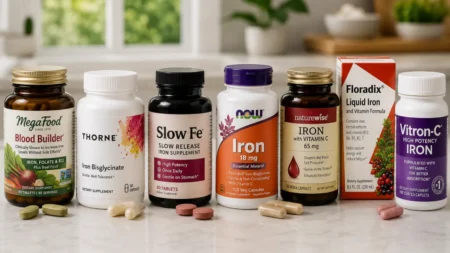
The best iron supplements for anemia in 2026 combine a well-absorbed iron form, a dose matched to your lab results, and a formula gentle enough to take daily. This guide compares 7 proven options, explains how to pick the right one, and shows you how to take iron the right way.
Low iron affects millions of people every year, and fatigue is often the first clue. You feel tired, your skin looks pale, and everyday tasks drain you faster than before. Iron supplements restore the mineral your red blood cells need to carry oxygen, but the wrong product can cause stomach pain or simply fail to raise your levels.
Three groups face the highest risk of iron deficiency anemia: women with heavy menstrual cycles, pregnant women, and adults following a vegan or vegetarian diet. Endurance athletes and frequent blood donors also lose iron faster than a typical diet replaces it. Choosing the right supplement matters as much as taking one consistently, since the wrong iron form can leave you undertreated or uncomfortable.
What Are the Best Iron Supplements for Anemia in 2026?
The best iron supplements for anemia in 2026 are Thorne Iron Bisglycinate, Nature’s Bounty Iron 65mg, Slow Fe, Floradix Iron and Herbs, Vitron-C, MegaFood Blood Builder, and SiderAL Forte. Each product uses a different iron form, so your choice depends on your tolerance, your dose needs, and whether you want a tablet, capsule, or liquid.
You should confirm iron deficiency anemia with a blood test before you start any supplement. A complete blood count (CBC) and a ferritin test show your provider whether low iron, not another condition, causes your symptoms. Self treating fatigue with iron pills without testing can mask a more serious cause of anemia, such as internal bleeding.
How to Choose the Right Iron Supplement for Your Needs
To choose the right iron supplement, match the iron form to your stomach tolerance first, then check the elemental iron dose against your lab results. Adults with confirmed iron deficiency anemia typically need 100 mg to 200 mg of elemental iron daily, split into 1 to 3 doses.
Mild deficiency without anemia often responds to a lower maintenance dose of 15 mg to 30 mg daily. Severe anemia, confirmed by a hemoglobin level well below normal range, may require the higher end of the dosing range along with closer monitoring from your doctor.
Ferrous Sulfate vs Ferrous Bisglycinate vs Ferrous Gluconate
Ferrous sulfate delivers the highest elemental iron per tablet and costs the least among common forms. Ferrous bisglycinate causes fewer digestive side effects because your body absorbs it through a different pathway. Ferrous gluconate provides a lower dose per tablet, so it suits people who need a milder daily option.
Choose ferrous sulfate first if you have no history of stomach sensitivity. Switch to ferrous bisglycinate or ferrous gluconate if nausea or constipation stops you from taking your dose consistently.
Heme Iron vs Non-Heme Iron Sources
Heme iron comes from animal based supplements and food sources such as beef liver, and your body absorbs it 2 to 3 times more efficiently than non-heme iron. Non-heme iron comes from plant based supplements and mineral salts such as ferrous sulfate, ferrous gluconate, and ferrous fumarate.
Vegans and vegetarians often need higher doses of non-heme iron to match the absorption rate of heme iron. Pairing non-heme iron with vitamin C at each dose narrows this absorption gap significantly.
7 Best Iron Supplements for Anemia and Low Energy (2026 Picks)
These 7 iron supplements represent the most commonly recommended options for anemia and low energy in 2026, based on iron form, dose, and tolerance.
1. Thorne Iron Bisglycinate: Best Overall for Adults
Thorne Iron Bisglycinate delivers 25 mg of chelated iron per capsule and carries NSF Certified for Sport testing. This chelated form causes noticeably less stomach upset than standard ferrous sulfate tablets. The lower per capsule dose means some adults need 2 capsules daily to reach a therapeutic range.
2. Nature’s Bounty Iron 65mg: Best Budget Option
Nature’s Bounty Iron uses ferrous sulfate to deliver 65 mg of elemental iron per tablet at a low cost per serving. This tablet suits adults who tolerate standard iron salts well and want a high dose in a single pill. Take this tablet with food if you notice nausea on an empty stomach.
3. Slow Fe: Best for Sensitive Stomachs
Slow Fe uses a controlled release system that spreads 45 mg of ferrous sulfate across several hours instead of releasing it all at once. This gradual release reduces the constipation and cramping that standard iron tablets often cause. Slower absorption also means Slow Fe works best for maintenance rather than rapid correction of severe anemia.
4. Floradix Iron and Herbs: Best Liquid Iron
Floradix combines plant extracts, vitamin C, and B vitamins in a liquid iron formula dosed at 10 ml (0.34 fl oz) once or twice daily. This liquid format works well for adults and teens who struggle to swallow tablets or capsules. Floradix delivers a lower iron dose than tablet options, so it may not correct severe anemia on its own.
5. Vitron-C: Best With Added Vitamin C
Vitron-C pairs carbonyl iron with 125 mg of vitamin C in every tablet to improve absorption at the point of intake. This combination raises iron levels effectively while limiting the constipation linked to ferrous salts. Take Vitron-C with a full 8 ounce (240 ml) glass of water to reduce stomach irritation.
6. MegaFood Blood Builder: Best Food Based Formula
MegaFood Blood Builder delivers 26 mg of iron from a whole food base that includes beets, oranges, and broccoli. This food based approach makes Blood Builder one of the gentlest options for daily, ongoing iron support. The lower dose fits mild deficiency better than acute, severe anemia.
7. SiderAL Forte: Best Advanced Absorption Technology
SiderAL Forte uses sucrosomial technology, a coating that protects iron from stomach acid until it reaches the intestine. This delivery system produces 3 to 4 times higher absorption than standard iron salts in comparable studies. SiderAL Forte costs more than basic ferrous sulfate tablets, but many users tolerate it with zero digestive side effects.
How to Take Iron Supplements for Better Absorption
To take iron supplements for better absorption, pair each dose with 200 mg of vitamin C or a serving of citrus fruit. Vitamin C converts non-heme iron into a form your intestine absorbs more readily, which raises your total uptake per dose.
Take your iron dose on an empty stomach when possible, since food can reduce absorption by up to 40%. Switch to taking iron with a small snack instead if nausea prevents you from keeping the empty stomach schedule.
Space your iron dose at least 2 hours away from milk, cheese, and calcium supplements. Calcium competes with iron for the same absorption pathway in your intestine, so timing separation preserves your dose.
Avoid tea and coffee within 1 hour of your iron dose, since tannins bind to iron and block uptake. A vitamin C tablets guide can help you pick a companion supplement that boosts absorption on days when fresh citrus is not available.
What Signs Point to Low Iron and Anemia?
Fatigue, pale skin, shortness of breath, and cold hands are the 4 most common signs of low iron and anemia. Brittle nails, unusual cravings for ice or dirt, and frequent headaches also point to iron deficiency in many adults.
Women lose iron monthly through menstruation, so heavy periods raise the risk of deficiency significantly. Athletes, frequent blood donors, and people recovering from surgery also lose iron faster than their diet replaces it.
If you notice 3 or more of these signs together, request a ferritin and CBC test rather than starting supplements blindly. Ferritin measures your stored iron, while a CBC shows whether your red blood cells are already smaller or paler than normal.
Children with low iron often show behavior changes, poor concentration, and slower growth rather than the classic fatigue adults report. Report these signs to a pediatrician rather than starting an over the counter iron supplement without guidance, since children need weight based dosing.
Which Foods Naturally Boost Iron Absorption?
Lean red meat, beef liver, and oysters supply the most easily absorbed heme iron among common foods. Plant based sources such as lentils, spinach, tofu, and fortified cereals provide non-heme iron, which your body absorbs at a lower rate.
Pair plant based iron foods with vitamin C rich options like bell peppers, strawberries, and oranges at the same meal. This combination raises non-heme iron absorption by 2 to 3 times compared with eating the iron source alone.
Cooking in a cast iron pan adds a measurable amount of iron to acidic foods such as tomato sauce. Avoid drinking tea or coffee with iron rich meals, since tannins in both drinks block a significant portion of the iron your body would otherwise absorb.
Food alone rarely reverses confirmed iron deficiency anemia within a reasonable timeframe. Use food sources to maintain your iron level after supplementation restores your ferritin to a healthy range.
Quick-Reference Table: Building Your Daily Iron Routine
Task | Timing | Method | Difficulty |
| Take iron dose | Once daily, morning | Swallow with water or citrus juice | Easy |
| Add vitamin C | With each iron dose | Pair with 200 mg vitamin C or citrus fruit | Easy |
| Avoid calcium | 2 hours before or after iron | Separate iron from dairy and calcium pills | Moderate |
| Avoid tea and coffee | 1 hour before or after iron | Skip caffeinated drinks near your dose | Moderate |
| Retest ferritin | After 8 to 12 weeks | Order bloodwork through your doctor | Easy |
| Switch iron form | After 2 weeks of GI upset | Change to bisglycinate or liquid iron | Moderate |
What Side Effects Do Iron Supplements Cause?
Nausea, constipation, dark stools, and stomach cramps are the most common side effects of iron supplements. These effects come from unabsorbed iron interacting with your digestive tract rather than from the mineral itself causing harm.
Take your dose with a small amount of food if nausea persists past the first week. Increase your water and fiber intake daily if constipation becomes uncomfortable during supplementation.
Contact your doctor immediately if you experience severe abdominal pain, vomiting, or black tarry stools that are not explained by the supplement’s normal dark stool effect. These symptoms may signal an iron overdose or an unrelated gastrointestinal issue that needs evaluation.
Keep iron supplements away from children at all times, since accidental iron overdose is a leading cause of pediatric poisoning deaths. A single adult dose can seriously harm a small child, so store your bottle in a locked cabinet rather than an open shelf.
How to Choose Iron Supplements During Pregnancy or Heavy Periods
To choose iron supplements during pregnancy, ask your obstetrician to confirm your dose based on trimester-specific bloodwork rather than a generic label recommendation. Pregnant women typically need 27 mg to 30 mg of elemental iron daily, though confirmed anemia raises that figure.
Women with heavy periods should test ferritin every 3 to 6 months while supplementing, since monthly blood loss can outpace a standard maintenance dose. A multivitamin for women that already contains iron can simplify your routine if you also need broader nutrient coverage during heavy cycles.
Do not combine a separate iron supplement with an iron-containing multivitamin without checking your combined daily total. Excess iron accumulates in your liver over time and can reach toxic levels with repeated over-supplementation.
Postpartum women often need continued iron support for several months after delivery, especially following significant blood loss during birth. Discuss a tapering plan with your provider rather than stopping iron abruptly once your energy improves, since ferritin stores take longer to rebuild than hemoglobin levels.
Zinc and iron compete for absorption when taken together in high doses, so avoid stacking high-dose zinc and iron tablets in the same daily routine.
Frequently Asked Questions
Do iron supplements really help with anemia?
Yes, iron supplements correct iron deficiency anemia in most adults within 8 to 12 weeks of consistent use.
Can I take iron supplements every day?
Yes, daily dosing is standard, though alternate day dosing may improve absorption for some adults under clinician guidance.
Do iron supplements cause constipation?
Yes, ferrous salts commonly cause constipation, while chelated and liquid forms cause it less often.
Is liquid iron better than tablets for absorption?
Liquid iron absorbs quickly but delivers a lower dose per serving than most tablets. Your choice depends on tolerance and how much elemental iron you need daily.
How long until iron supplements raise my energy levels?
Most adults notice improved energy within 2 to 4 weeks of consistent daily supplementation. Full ferritin recovery can take 3 to 6 months depending on your starting deficiency.
Conclusion
The best iron supplements for anemia in 2026 combine a tolerable iron form, an accurate dose, and consistent daily use paired with vitamin C. Confirm your levels with a blood test, pick a product from this list that matches your stomach tolerance, and retest after 8 to 12 weeks to track progress. Once your iron levels stabilize, check our zinc tablets guide on Pordeshi Blog to round out your mineral intake without triggering absorption conflicts.