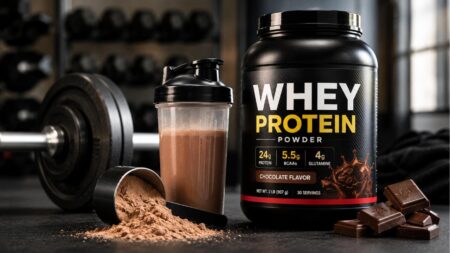
The best whey protein powder in 2026 delivers 24 grams (0.85 oz) to 30 grams (1.1 oz) of protein per scoop, uses a whey isolate or whey blend as its base, and carries a third-party certification. You get faster muscle recovery, easier daily protein targets, and a cleaner label than most whole-food sources offer alone.
This guide lists the top products, breaks down each type of whey, and shows you how to match a formula to your body and budget. You also get a dosing formula, a timing table, and buying advice specific to Bangladesh and South Asia.
What Is the Best Whey Protein Powder for Most People in 2026?
Optimum Nutrition Gold Standard 100% Whey and Transparent Labs 100% Grass-Fed Whey Isolate rank as the top 2 choices for the best whey protein powder in 2026.
Optimum Nutrition blends whey isolate, concentrate, and peptides to deliver 24 grams of protein per scoop across 12 flavors, including Double Rich Chocolate and French Vanilla Creme. Transparent Labs uses 100% grass-fed whey isolate from American dairy cows, delivering 28 grams of protein with 1 gram of fat and 1 gram of carbs per serving.
Momentous Whey Protein Isolate adds a third strong option, sourcing whey from European dairy farms that skip added hormones such as recombinant bovine growth hormone (rBGH). Each of these 3 products carries Informed Choice or NSF Certified for Sport testing, so the label matches the tub.
Naked Whey and Ghost Whey Protein Powder cover the 2 opposite ends of the flavor spectrum. Naked Whey uses a single ingredient and suits you if you want an unflavored whey protein powder with no additives. Ghost Whey Protein Powder uses dessert-style flavors, including Cereal Milk and Cookies and Cream, and suits you if taste drives your purchase decision.
You match your pick to your specific goal rather than the marketing claim on the front of the tub. A budget shopper gets more value from Nutricost Whey Protein Concentrate, priced near $1 per serving. An athlete facing regular drug testing needs the NSF Certified for Sport mark, since that program screens for 270 banned substances.
What Are the 3 Types of Whey Protein Powder?
Whey protein powder comes in 3 forms: concentrate, isolate, and hydrolysate. Each form starts from the same liquid whey byproduct of cheese production, then differs in filtration and processing method.
What Is Whey Protein Concentrate (WPC)?
Whey protein concentrate (WPC) keeps 70% to 80% protein by weight, along with some natural lactose and fat.
WPC costs less than isolate and suits you if you tolerate dairy well.
A typical scoop of WPC delivers 20 grams to 24 grams of protein alongside 2 grams to 3 grams of lactose.
What Is Whey Protein Isolate (WPI)?
Whey protein isolate (WPI) passes through microfiltration, raising protein content to 90% or higher by weight.
WPI fits you best if you need a low-lactose or low-fat option.
A scoop of WPI usually carries 25 grams to 30 grams of protein with under 1 gram of lactose per serving.
What Is Whey Protein Hydrolysate (WPH)?
Whey protein hydrolysate (WPH) breaks protein chains into smaller peptides before you drink it.
WPH absorbs faster than WPC or WPI, making it useful right after intense training.
This form costs more than WPC or WPI, since the extra processing step raises manufacturing time and equipment cost.
How to Choose the Best Whey Protein Powder for Your Goal
To choose the right whey protein powder for your goal, you match protein type, calorie count, and added ingredients to your target outcome.
Whey Protein for Muscle Gain
Dymatize ISO100 Hydrolyzed and Momentous Whey Protein Isolate both suit muscle gain, delivering 25 grams and 20 grams of protein with added leucine.
Leucine triggers muscle protein synthesis at doses of 2.5 grams to 3 grams per serving.
Pair either product with resistance training 3 to 5 days per week for the fastest strength and size results.
If bone and joint support matter to your training goals, review this vitamin D3 K2 guide alongside your protein plan.
Whey Protein for Weight Loss
Optimum Nutrition Casein Protein Powder suits weight loss better than whey, since casein digests slowly and curbs appetite for 3 to 4 hours.
Choose a whey isolate under 130 calories per serving if you prefer whey during a calorie deficit. Avoid any tub carrying more than 5 grams of added sugar per scoop.
Whey Protein for Sensitive Stomachs
Mindbodygreen Grass-Fed Whey Protein Isolate+ removes casein and lowers lactose, easing digestion for people with mild dairy intolerance.
A whey isolate with under 1 gram of lactose per scoop causes fewer stomach issues than concentrate.
Test a single scoop with 8 ounces (240 ml) of water before committing to a full-size tub.
How to Read a Whey Protein Powder Label Correctly
To read a whey protein powder label correctly, you check protein per serving, serving size in grams, and the certification seal before comparing price.
Why Serving Size Changes the Real Protein Count
Brands list protein per scoop rather than protein per 100 grams, so 2 tubs with the same price can differ by 8 grams to 10 grams of protein per serving.
A tub advertising 24 grams of protein from a 33-gram scoop delivers less protein density than a 30-gram scoop with 27 grams of protein.
Divide grams of protein by total scoop weight to compare 2 products fairly, since a bigger scoop does not always mean more protein.
Which Label Claims Need Independent Verification
Claims such as clinically proven, doctor recommended, and maximum absorption carry no legal definition under FDA supplement rules.
A published COA, a visible batch number, and a real customer service address on the label signal a manufacturer willing to stand behind its product. Skip tubs that list only a P.O. box or no manufacturing address at all.
What Ingredients Should You Avoid in Whey Protein Powder?
You avoid 3 ingredient categories: artificial sweeteners, amino-spiking fillers, and undisclosed proprietary blends.
- Artificial sweeteners: sucralose and acesulfame potassium trigger bloating in some users, even though the Food and Drug Administration (FDA) classifies both as safe.
- Amino-spiking fillers: glycine and taurine boost the total amino acid count on a label without adding real whey protein.
- Proprietary blends: a hidden blend masks the exact gram count of each ingredient, so you cannot verify true protein content.
Check the label for a full amino acid breakdown before you buy any tub. A brand that publishes exact gram amounts for every ingredient earns more trust than one that does not.
Fillers such as maltodextrin, cellulose gum, and soy lecithin appear in many budget tubs to improve texture and shelf life. None of these 3 fillers add meaningful protein, though small amounts rarely cause harm for most people.
A short ingredient list, ideally under 8 total items, usually signals a cleaner formula than a long list packed with gums, colors, and flavor enhancers.
Joint and skin health depend on ingredients outside your protein shake too. If you support recovery with additional supplements, this organic collagen supplements guide covers dosing and sourcing for connective tissue support.
How Much Whey Protein Powder Do You Need Per Day?
You need 0.7 grams to 1 gram of protein per pound (1.5 grams to 2.2 grams per kilogram) of body weight if you train regularly.
A person weighing 154 pounds (70 kg) needs 108 grams to 154 grams of total protein daily. A person weighing 187 pounds (85 kg) needs 131 grams to 187 grams daily.
Whey protein powder fills gaps between meals rather than replacing whole food sources such as chicken breast, eggs, and lentils. Split your protein across 3 to 5 meals daily instead of one large serving, since your body absorbs 25 grams to 40 grams of protein per sitting most efficiently.
A single scoop of whey protein powder covers 20 grams to 30 grams of your daily target, leaving the remaining amount for whole-food meals and snacks.
Older adults over age 65 benefit from a higher range near 1 gram per pound (2.2 grams per kilogram), since aging muscle responds less efficiently to lower protein intakes. A 143-pound (65 kg) older adult targets close to 143 grams daily.
When Is the Best Time to Take Whey Protein Powder?
You get the most benefit from whey protein powder within 2 hours after resistance training.
Timing shifts slightly depending on your specific goal, so review the schedule in the table below before you plan your daily routine.
How to Time Whey Protein Powder Around Workouts
To time whey protein powder around workouts, you drink one scoop within 30 minutes to 2 hours after your last set.
Your muscles absorb amino acids fastest during this window, supporting repair and growth. Pair the shake with 20 grams to 30 grams of fast carbohydrates, such as a banana or 1 cup (185 g) of white rice, to speed glycogen replacement.
Can You Take Whey Protein Powder Before Bed?
Yes, you can take whey protein powder before bed, though casein digests slower and suits overnight recovery better.
A blended scoop of whey and casein 30 to 60 minutes before sleep supports muscle repair through the night. Avoid drinking a full 40-gram serving right before bed if you struggle with digestion or reflux.
Quick-reference table: goal, timing, mixing method, and difficulty
Goal | Best Timing | Mixing Method | Difficulty |
| Muscle gain | Within 30 minutes post-workout | Shaker bottle, 8-10 oz (240-300 ml) water | Easy |
| Weight loss | Between meals, 2-3 times daily | Blender, ice, 12 oz (355 ml) water | Easy |
| Meal replacement | Breakfast or lunch | Blender, fruit, 16 oz (475 ml) milk | Moderate |
| Sensitive stomach | 1-2 hours before workout | Slow stir, 10 oz (300 ml) water | Easy |
| Sleep support | 30-60 minutes before bed | Shaker bottle, 8 oz (240 ml) milk | Easy |
What Certifications Prove a Whey Protein Powder Is Safe?
NSF Certified for Sport, Informed Choice, and Informed Sport rank as the 3 certifications that prove label accuracy and banned-substance screening.
NSF International tests for 270+ banned substances, matching standards used by the National Football League (NFL), Major League Baseball (MLB), and the Professional Golfers’ Association (PGA).
Informed Choice, run by LGC Group, tests every production batch for over 250 substances banned in competitive sport. A Certificate of Analysis (COA), published on the brand’s website, confirms heavy metal and microbial safety for a specific batch number.
Skip any brand that refuses to publish COAs or batch-specific test results. A missing COA signals lower manufacturing transparency, regardless of how clean the ingredient list looks.
How to Buy the Best Whey Protein Powder in Bangladesh and South Asia
To buy whey protein powder in Bangladesh, you check customs duty rates, cold-chain shipping, and authorized distributor status before ordering.
Import duty on supplement products through Dhaka customs runs 25% to 45% of declared value, depending on product classification. Order from an authorized local distributor or a marketplace that ships direct from the manufacturer, such as iHerb or Amazon Global, to reduce the risk of a customs hold.
Verify the batch code on the tub against the brand’s website to confirm the product is not counterfeit or expired.
Store your tub below 77°F (25°C) in a sealed container, since humidity levels in Dhaka and Chattogram speed up clumping and reduce shelf life. A silica packet inside the tub extends usable freshness by several weeks.
Compare 3 shipping options before you order: a local gym supplement shop, a regional distributor in Dhaka, and a direct international courier such as DHL or FedEx. Local shops skip customs delays but often mark up prices by 20% to 35%.
A direct courier order usually lands within 7 to 14 days, though customs inspection can add 3 to 5 extra days during peak shipping seasons. Track your shipment number daily once it clears the origin warehouse.
Choosing the Best Whey Protein Powder for Your 2026 Routine
Picking the best whey protein powder in 2026 comes down to 3 factors: protein type, certification, and how the formula fits your daily goal.
Optimum Nutrition Gold Standard, Transparent Labs Whey Isolate, and Momentous Whey Protein Isolate cover most budgets and training needs. Check the label for real testing data before every purchase, then match your dose to your body weight and training schedule.
For a full look at complementary supplements that round out hair, skin, and nail support alongside your protein routine, read this biotin supplements guide next.
Frequently Asked Questions About the Best Whey Protein Powder
Is Whey Protein Powder Safe to Take Every Day?
Yes, whey protein powder is safe daily for most healthy adults when you stay within 25 grams to 40 grams per serving and 2 to 3 servings daily.
Is Whey Protein Isolate Better Than Whey Protein Concentrate?
Whey protein isolate suits low-lactose diets better, while concentrate costs less and keeps more natural nutrients. Neither option outperforms the other for every user.
Does Whey Protein Powder Cause Weight Gain?
No, whey protein powder does not cause weight gain unless your total daily calorie intake exceeds your maintenance level.
Can You Take Whey Protein Powder Without Exercising?
Yes, you can take whey protein powder without exercise to close daily protein gaps, though muscle gain still requires resistance training.
How Long Does an Opened Tub of Whey Protein Powder Last?
An open tub of whey protein powder lasts 3 to 6 months when stored sealed in a cool, dry space below 77°F (25°C).