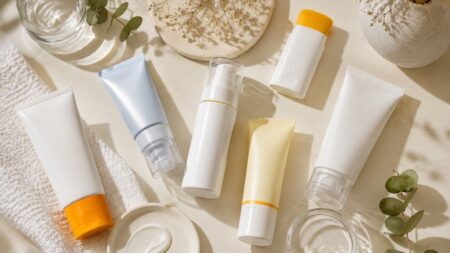
The best sunscreen for dry skin in 2026 combines broad-spectrum SPF 30 to SPF 50 with hydrating ingredients such as hyaluronic acid, ceramides, and glycerin. You need a formula that blocks UV rays and rebuilds your moisture barrier in the same step.
Dry skin loses water through its outer layer faster than normal skin. Sun exposure speeds up this water loss and breaks down collagen underneath. You still need daily sun protection, but the wrong sunscreen leaves your cheeks tight and flaky within hours.
This guide ranks 7 dermatologist-approved sunscreens for dry skin, breaks down the exact ingredients that matter, and shows you how to apply sunscreen without disturbing your skin’s hydration. You will also find a routine table, a Bangladesh climate section, and 5 common application mistakes to avoid.
What Is the Best Sunscreen for Dry Skin in 2026?
A cream or lotion sunscreen with SPF 50, zinc oxide or titanium dioxide, and hyaluronic acid delivers the strongest results for dry skin in 2026. Gel and spray sunscreens dry out faster because their alcohol content evaporates quickly and pulls moisture from your skin along with it.
Dermatologists at brands like EltaMD, La Roche-Posay, and Cetaphil build their dry-skin sunscreens around 3 shared traits: broad-spectrum SPF 30 to 50, added ceramides or squalane, and a fragrance-free base. These 3 traits protect your skin from UVA and UVB rays while they reduce irritation risk.
Why Does Dry Skin React Badly to Most Sunscreen Formulas?
Dry skin reacts badly to most sunscreens because alcohol-based gels and certain chemical filters strip natural oils from an already weak moisture barrier. Your skin loses water faster than it can replace it, a process dermatologists call transepidermal water loss (TEWL).
Denatured alcohol, high concentrations of octinoxate, and added fragrance cause the most irritation. These 3 ingredients evaporate fast, leaving a tight, dehydrated feeling around your nose, cheeks, and mouth within 30 minutes of application.
Heat, air conditioning, and pollution add to the problem. Your skin faces constant moisture loss from your environment, then loses even more when you apply a drying sunscreen on top.
A weak moisture barrier also lets more UV damage reach living skin cells underneath. This creates a cycle: dryness weakens your barrier, a weak barrier lets in more sun damage, and sun damage weakens your barrier further.
What Ingredients Should You Look for in a Sunscreen for Dry Skin?
Hyaluronic acid, ceramides, glycerin, and squalane give a sunscreen the hydration power that dry skin needs. Each ingredient works through a different mechanism, so a formula with 2 or more of these ingredients protects your moisture barrier better than SPF alone.
Hyaluronic Acid and Glycerin Lock In Moisture
Hyaluronic acid holds up to 1,000 times its weight in water, pulling moisture into the top layer of your skin. Glycerin works alongside it as a humectant, drawing water from the air and from deeper skin layers toward the surface.
Together, these 2 ingredients keep your skin plump for 6 to 8 hours after application. Look for hyaluronic acid concentrations between 0.1% and 2% on the ingredient label.
Ceramides Repair the Skin Barrier
Ceramides make up nearly 50% of the lipid content in your skin’s outer layer. Dry skin often has a ceramide deficiency, which lets water escape and allergens enter more easily.
A sunscreen with added ceramides rebuilds this barrier over 2 to 4 weeks of daily use. Brands like Cetaphil, CeraVe, and Dr. Sheths add ceramides 1, 3, and 6-II to match your skin’s natural ratio.
Squalane Softens Rough, Dry Patches
Squalane mimics the natural oil your skin produces, so it absorbs quickly without leaving a greasy film. A sunscreen with 1% to 5% squalane softens rough patches around your nose and jawline within 1 to 2 weeks of daily use.
Zinc Oxide and Titanium Dioxide Protect Without Irritation
Zinc oxide and titanium dioxide sit on the surface of your skin and reflect UV rays instead of absorbing them. These 2 mineral filters cause fewer allergic reactions than chemical filters like avobenzone or oxybenzone.
Non-nano zinc oxide at 15% to 20% concentration gives you broad-spectrum protection without the white cast older formulas left behind.
Mineral Sunscreen vs Chemical Sunscreen for Dry Skin: Which Wins?
Mineral sunscreen wins for most dry skin types because zinc oxide and titanium dioxide cause less irritation than chemical filters. Chemical sunscreens absorb into your skin and convert UV rays into heat, a process that can trigger redness on a compromised barrier.
Chemical sunscreens still hold 2 advantages. They spread more easily without a white cast, and they layer better under makeup. If you choose a chemical formula, pick one with Tinosorb S or Tinosorb M, since these filters cause less irritation than older options like octinoxate.
Combination formulas that blend a low percentage of zinc oxide with 1 or 2 gentle chemical filters give you a light texture and minimal irritation together.
What Do SPF and PA Ratings Actually Mean for Dry Skin?
SPF (Sun Protection Factor) measures UVB defense, while PA (Protection Grade of UVA) measures UVA defense, and dry skin needs both ratings at their highest practical levels.
SPF 30 blocks 97% of UVB rays, SPF 50 blocks 98%, and SPF 100 blocks 99%. The jump between SPF 50 and SPF 100 protects only 1% more of your skin, so SPF 50 gives you the best balance of protection and comfort for daily dry-skin use.
PA ratings use a plus-sign scale. PA+ offers some protection, PA++ offers moderate protection, PA+++ offers high protection, and PA++++ offers the highest available protection against UVA rays. UVA rays penetrate glass and clouds, so they reach your skin even on overcast days or during a short walk to your car.
Dry skin benefits from PA+++ or PA++++ ratings because UVA rays break down collagen and worsen moisture loss over time. A sunscreen rated SPF 50 PA++++ gives your skin the widest protection window against both burning and long-term barrier damage.
Check both numbers on the label before you buy. A sunscreen with high SPF but low PA still leaves your skin exposed to UVA-driven dryness and premature aging.
How to Apply Sunscreen on Dry Skin for All-Day Hydration
To apply sunscreen on dry skin for all-day hydration, layer a hydrating serum first, follow with a barrier-repair moisturizer, then finish with your sunscreen 2 to 3 minutes later. This order lets each product absorb fully before the next one goes on.
Layer Moisturizer Before Sunscreen
Apply your moisturizer in a thin layer and wait 2 to 3 minutes before sunscreen application. This gap lets the moisturizer sink in fully, so your sunscreen glides on smoothly instead of pilling into small white flakes.
Use 2 Finger-Lengths of Product for Your Face
Squeeze 2 full finger-lengths of sunscreen onto your index and middle fingers for complete face coverage. Most people apply only half this amount, which cuts their actual SPF protection by more than 50%.
Sunscreen Routine for Dry Skin at a Glance
| Task | Timing | Method | Difficulty |
| Cleanse face | Morning, step 1 | Lukewarm water with a gentle cleanser | Easy |
| Apply hydrating serum | Right after cleansing | Pat 3 to 4 drops into damp skin | Easy |
| Apply moisturizer | 1 to 2 minutes after serum | Thin, even layer across your face | Easy |
| Apply sunscreen | 2 to 3 minutes after moisturizer | 2 finger-lengths, upward strokes | Moderate |
| Reapply sunscreen | Every 2 hours outdoors | Powder or spray formula over makeup | Moderate |
7 Best Sunscreens for Dry Skin in 2026 (Tested Picks)
These 7 picks represent the best sunscreen for dry skin across cream, gel, and mineral formulas, each chosen for SPF strength and hydrating ingredients that dermatologists recommend for a compromised moisture barrier.
1. EltaMD UV Daily Hydration+ SPF 50
EltaMD UV Daily Hydration+ SPF 50 uses transparent zinc oxide for broad-spectrum protection, then adds hyaluronic acid and squalane for hydration. The lightweight formula absorbs within 60 seconds and leaves no white cast, making it comfortable under makeup or worn alone.
2. La Roche-Posay Anthelios UVMune 400 Hydrating Cream SPF 50+
This cream pairs Uvmune 400 filter technology with glycerin and ceramides to guard against UVA rays up to 400 nanometers. Dermatologists recommend it for dry, scar-prone, and post-procedure skin because of its low irritation profile.
3. Cetaphil Sheer Mineral Face Liquid Sunscreen SPF 50
Cetaphil’s mineral formula relies on zinc oxide and niacinamide, giving you broad-spectrum coverage plus a calmer, more even tone. The fragrance-free, fungal-acne-safe formula suits dry skin that reacts to added scents.
4. The Derma Co 1% Hyaluronic Sunscreen Aqua Gel SPF 50 PA++++
Despite its gel texture, this sunscreen carries 1% hyaluronic acid to counter the drying effect gels usually cause. It also blocks blue light from screens, a bonus for anyone working long hours indoors.
5. Minimalist SPF 50 PA++++ Sunscreen
Minimalist blends Tinosorb M with multi-vitamins for a lightweight, water-resistant formula. The vitamin blend supports your skin barrier while the broad-spectrum filters guard against premature aging.
6. Bioderma Photoderm Creme SPF 50+ PA++++
Bioderma’s cream formula uses Sun Active Defence technology alongside ectoin and xylitol to hold moisture for up to 8 hours. Dermatologists prescribe it most often for dry, sensitive, and post-treatment skin.
7. Neutrogena Hydro Boost Water Gel SPF 25
Neutrogena’s water gel delivers hyaluronic acid in a hydrating base, though its SPF 25 rating means you should layer it with a higher-SPF product for full-day outdoor protection.
Best Sunscreen Choices for Bangladesh’s Humid Climate
A lightweight cream sunscreen with SPF 50 and a matte-hydrating finish works best in Bangladesh’s climate because it resists sweat without clogging your pores. Dhaka’s average humidity stays above 70% for 8 months of the year, which changes how a sunscreen wears on your face.
Monsoon season, from June through September, adds constant moisture to the air while UV index levels still reach 8 to 11 on clear days. Your skin needs sun protection and oil control at the same time, a combination that plain moisturizing creams cannot handle alone.
Choose a sunscreen with a 30-second absorption time and a matte-finish claim if you live in Dhaka, Chattogram, or Sylhet. Reapply after your commute or after a rickshaw ride, since sweat and humidity break down SPF coverage faster than dry climates allow.
Winter months in Bangladesh, from December through February, bring lower humidity and stronger dryness for many skin types. Switch to a slightly richer cream formula during these 3 months, then return to a lighter gel-cream once the humidity climbs back above 60%.
Repair sun exposure overnight with a proper whitening night cream routine that targets pigmentation from tropical sun exposure without over-drying your skin further.
5 Mistakes That Make Dry Skin Worse After Sunscreen
Small routine errors undo the hydration benefits of even the best sunscreen for dry skin. Watch for these 5 mistakes in your daily application.
- Skipping moisturizer before application. Sunscreen alone cannot replace a dedicated moisturizer, since most SPF formulas contain fewer hydrating ingredients than standalone creams.
- Choosing a mattifying gel sunscreen. Gel formulas often contain higher alcohol content, which strips moisture your dry skin cannot spare.
- Washing your face with hot water. Hot water breaks down your skin’s natural oil layer before you even apply sunscreen.
- Skipping reapplication indoors. UV rays pass through windows, so your skin keeps losing moisture even when you stay inside near a window.
- Using strong exfoliating acids every morning under sunscreen. This habit increases sensitivity on dry skin.
Pair your morning actives with a gentle salicylic acid face wash instead of a harsh scrub, and reserve stronger acids for your evening routine.
Frequently Asked Questions About Sunscreen for Dry Skin
Does sunscreen make dry skin worse?
No. Sunscreen itself does not cause dryness. Alcohol, fragrance, and certain chemical filters inside some formulas cause the irritation, not sun protection itself. The best sunscreen for dry skin avoids these 3 irritants entirely.
Can I skip moisturizer if my sunscreen is hydrating?
No. Even a hydrating sunscreen carries fewer moisturizing ingredients than a dedicated moisturizer, so your skin barrier needs both products layered together.
Is SPF 30 enough for dry skin?
Yes. SPF 30 blocks about 97% of UVB rays, which meets the minimum standard dermatologists recommend for the best sunscreen for dry skin, though SPF 50 gives you a wider safety margin for outdoor days.
Should I use mineral or chemical sunscreen for dry, sensitive skin?
Mineral sunscreen suits dry, sensitive skin better because zinc oxide and titanium dioxide sit on top of your skin instead of absorbing into it.
How often should you reapply sunscreen on dry skin?
Reapply every 2 hours outdoors, and immediately after sweating or wiping your face. Indoor days near windows still need 1 reapplication around midday.
Choose the Sunscreen Your Dry Skin Actually Needs
Dry skin needs a sunscreen for dry skin that protects and hydrates in a single step, not 2 separate battles each morning. Pick a cream or lotion formula with SPF 30 to 50, add hyaluronic acid or ceramides to your ingredient checklist, and apply 2 finger-lengths every single day.
Track how your skin feels 2 hours after application. Tightness or flaking signals the formula does not match your skin’s needs, while a soft, comfortable finish confirms you found the right sunscreen for dry skin in 2026.
Pair your sun protection with a collagen hyaluronic acid supplement to support hydration from within, and explore our astaxanthin supplement guide for antioxidant protection that works alongside your daily SPF routine.